Table of Contents
TogglePatio curtains aren’t just decorative, they’re functional problem-solvers that add privacy, shade, and wind protection to outdoor spaces. Whether someone’s dealing with a glaring afternoon sun, nosy neighbors, or dust blowing in from a nearby lot, the right curtains can make a patio feel like an outdoor room rather than an exposed deck. They soften hard edges, define zones, and let homeowners control light and airflow without permanent construction. With new fabrics and hardware designed specifically for outdoor use, installing patio curtains has become a straightforward weekend project that delivers immediate results.
Key Takeaways
- Outdoor patio curtains solve multiple problems—privacy, sun control, wind protection, and visual definition—transforming an exposed deck into a functional outdoor room.
- Solution-dyed acrylic (Sunbrella) is the best fabric choice for outdoor patio curtains due to superior fade resistance and durability, though budget-friendly UV-resistant polyester and mesh fabrics offer practical alternatives.
- Proper installation requires secure hardware mounted into solid framing, and heavier blackout curtains need stainless steel or powder-coated aluminum rods to prevent sagging and wind damage.
- Regular maintenance—monthly rinsing, seasonal deep cleaning, annual hardware inspection, and reapplication of water repellent every 12–18 months—extends outdoor curtain lifespan significantly.
- Different curtain styles serve different needs: sheer panels provide light and airflow for open patios, while blackout-rated curtains offer complete privacy and energy efficiency for enclosed spaces.
Why Add Curtains to Your Outdoor Patio?
Privacy is the top reason most homeowners install outdoor curtains. A curtain panel creates an instant barrier between a patio and neighboring yards or sidewalks, without the cost or permanence of fencing or lattice screens. They can be drawn closed during gatherings or left open when the view matters more.
Sun control comes next. Even a pergola or roof overhang doesn’t block low-angle morning or evening sun. Curtains let users adjust coverage throughout the day, reducing glare and UV exposure. A single outdoor-rated panel can drop ambient temperature on a covered patio by several degrees, making the space usable during peak hours.
Wind and dust protection matters more than most people realize. In regions with seasonal winds or construction nearby, curtains act as a buffer, keeping patio furniture cleaner and reducing the need to sweep constantly. They also cut down on pollen in spring, a bonus for anyone with allergies.
Finally, curtains add visual definition to covered outdoor living spaces, turning a simple slab into a room with walls and a sense of enclosure. They frame views, hide storage areas, and let homeowners change the look seasonally without major renovations.
Best Fabric Types for Outdoor Patio Curtains
Not all fabric can handle UV, moisture, and temperature swings. Choosing the right material makes the difference between curtains that last five seasons and ones that fade or mildew by summer’s end.
Solution-dyed acrylic (like Sunbrella) is the gold standard for outdoor curtains. The color is locked into the fiber during manufacturing, so it resists fading even in full sun. It’s water-resistant, mildew-resistant, and available in dozens of patterns. Expect to pay $25–$50 per yard, but the longevity justifies the cost.
Outdoor polyester is the budget-friendly option. Look for fabrics labeled UV-resistant or fade-resistant, standard indoor polyester won’t hold up. These fabrics often have a water-repellent coating that beads moisture but may need retreatment after a year or two. They’re lighter than acrylic, which makes them easier to hang but more prone to blowing in the wind.
Mesh or sheer outdoor fabric works well for spaces where airflow matters more than privacy. These fabrics reduce sun intensity by 30–50% while still allowing breezes through. They’re ideal for screening out insects on a screened porch or softening harsh light without blocking views entirely.
Canvas or duck cloth offers a heavier, more structured look. It provides excellent sun and wind blocking but needs to be treated with a waterproofing spray to prevent water absorption and mildew. This fabric works best under a roof where it won’t get soaked during storms.
Avoid untreated cotton, linen, or indoor-only synthetics. They’ll fade, rot, or tear within a season. If someone already has indoor curtains they love, a UV-protective outdoor spray (reapplied annually) can extend their life, but it’s not a permanent solution.
Stylish Outdoor Curtain Ideas for Every Patio
The right curtain style depends on the patio’s structure, exposure, and how the space gets used. Here are setups that solve real problems and look good doing it.
Sheer Curtains for Light and Airy Spaces
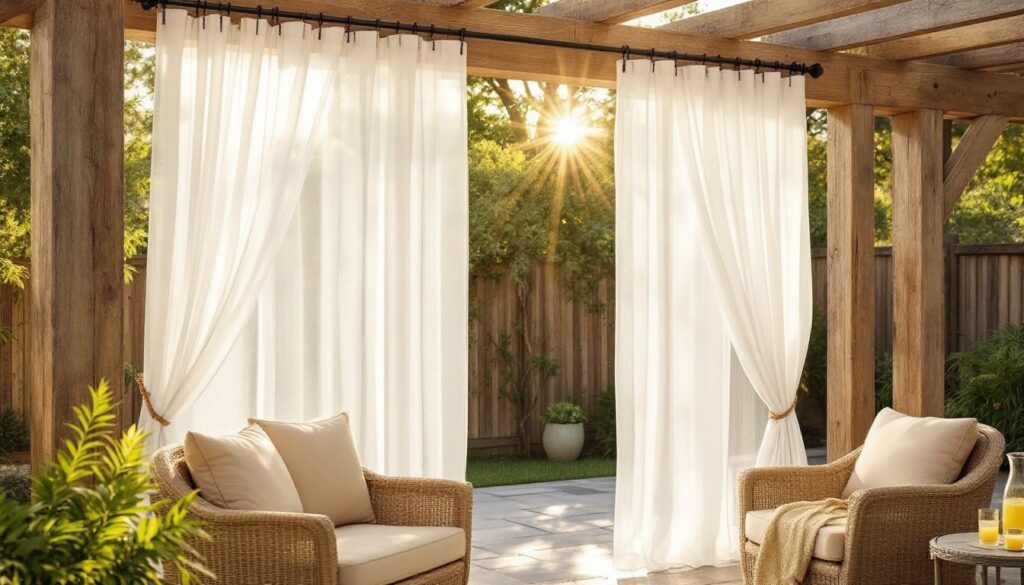
Sheer outdoor panels create soft, diffused light and a breezy, resort-like feel. They work best on patios with partial shade or where full privacy isn’t needed. Look for mesh or voile fabrics with a UV rating, standard sheers will disintegrate outdoors.
Hang them on sliding track systems for easy adjustment. A white or cream sheer panel reduces glare without making the space feel closed in, and it pairs well with both modern metal furniture and traditional wicker. For homeowners enhancing their outdoor living room, sheers add elegance without blocking sightlines to the yard.
One downside: sheers don’t block wind or provide much temperature control. Pair them with heavier curtains on a double rod if the patio needs flexibility between open and enclosed moods.
Blackout and Privacy Curtains for Enclosed Patios
Blackout-rated outdoor curtains use dense, multi-layer fabrics that block 90–100% of light and provide solid privacy. They’re ideal for three-season rooms, enclosed patios, or spaces used for outdoor movie nights.
These curtains are heavier, expect panels to weigh 3–5 lbs each, so mounting hardware needs to be robust. Use stainless steel or powder-coated aluminum rods with brackets screwed into studs or solid framing, not just into siding or trim. A sagging rod is a common failure point.
Blackout curtains also improve energy efficiency on enclosed porches by reducing heat transfer through large openings. In summer, they keep cool air in: in winter (if the patio is heated), they cut drafts. Choose neutral colors like charcoal, navy, or taupe to avoid overwhelming a small space.
For a layered look, combine blackout panels with stylish outdoor cushions in coordinating tones. This creates a cohesive design and makes the space feel intentionally decorated, not just functional.
How to Hang and Install Patio Curtains
Hanging outdoor curtains isn’t much different from indoor installation, but the hardware and fasteners need to handle weather exposure and wind load.
Step 1: Choose the mounting method. For covered patios with a solid roof or pergola beam, mount curtain rods or tracks directly to the underside of the structure using lag screws or stainless steel hardware. For freestanding setups, use tension rods (for lightweight fabrics only) or install posts or cables between existing columns.
Step 2: Measure and mark. Curtain rods should sit 4–6 inches above the opening and extend 6–12 inches beyond each side to allow panels to stack fully when open. Mark bracket positions with a pencil and level. If mounting into wood framing, locate the beam or joist with a stud finder, don’t rely on surface materials alone.
Step 3: Install brackets and rod. Pre-drill pilot holes to prevent splitting, especially in pressure-treated lumber. Use exterior-grade screws or lag bolts rated for outdoor use (galvanized or stainless). For outdoor living structures with metal frames, use self-tapping metal screws or U-bolts.
Step 4: Hang the curtains. Most outdoor curtains use grommets (metal or plastic rings at the top) or tab tops that slide onto the rod. Grommets slide more easily and handle wind better. For a cleaner look, use curtain rings with clips that attach to the top hem, this setup is also easier to remove for seasonal storage.
Step 5: Add tie-backs or hold-downs. Tie-backs (fabric straps, rope, or metal hooks) keep curtains open and prevent them from blowing around. Mount them to the post or wall at mid-height of the panel. For areas with strong winds, add weighted hems or snap fasteners at the bottom to anchor panels to the deck or wall when closed.
Safety note: Always wear eye protection when drilling overhead, and use a sturdy ladder with a helper to stabilize long rods during installation. If the patio structure feels flimsy or lacks solid attachment points, consult a contractor before hanging heavy curtains, adding load to an undersized pergola can cause sagging or failure.
Maintaining Your Outdoor Curtains Through the Seasons
Outdoor curtains take more abuse than indoor ones, so a little maintenance goes a long way.
Monthly cleaning: Shake out dust and debris. Most outdoor fabrics can be spot-cleaned with mild soap and water, avoid bleach, which degrades UV-resistant coatings. For acrylic and polyester, a garden hose rinse (on a gentle setting) removes pollen and dirt without a full wash.
Seasonal deep cleaning: Take panels down twice a year and machine wash on a gentle cycle with cold water and mild detergent. Air-dry only, high heat can shrink or damage water-repellent finishes. According to experts at The Spruce, allowing outdoor fabrics to fully dry before rehanging prevents mildew growth, especially in humid climates.
Winter storage: In regions with freezing temperatures or heavy snow, remove curtains and store them indoors. Fold them loosely and keep them in a dry, climate-controlled space to prevent mold. If leaving them up year-round, inspect grommets and hems for rust or tearing after winter storms.
Inspect hardware annually: Check brackets, screws, and rods for corrosion or loosening. Coastal areas and humid climates accelerate rust, even on stainless steel. Tighten fasteners and replace any hardware showing significant wear. Rods that sag or wobble won’t support the fabric properly and can pull free in high wind.
Reapply water repellent: If curtains start absorbing water instead of beading it, spray them with an outdoor fabric protector (like Scotchgard Outdoor). Reapply every 12–18 months or after deep cleaning. This simple step extends fabric life and keeps panels looking fresh.
Wind damage prevention: On days with storm warnings, tie curtains back or remove them entirely. Wind whipping fabric against metal hardware causes tears at grommets and fraying along hems. A few minutes of prep saves replacing panels mid-season. Homeowners invested in creating a complete outdoor living space should treat curtains as part of the overall upkeep routine, just like cushion covers or grill maintenance.
For design inspiration and fabric pairings, browsing curated outdoor curtain galleries can spark ideas that fit regional styles and climates.