Table of Contents
ToggleBuilding a stone outdoor kitchen isn’t just about grilling burgers on the patio, it’s about creating a durable, weatherproof cooking station that anchors your backyard entertainment zone. Stone construction offers unmatched longevity and heat resistance, making it the go-to material for serious outdoor chefs and hosts. Whether you’re planning a full cooking suite with a pizza oven and bar seating or a compact grill island, understanding material choices, design styles, and essential features will help you build a space that looks great and performs flawlessly through years of weather and use.
Key Takeaways
- Stone outdoor kitchen ideas combine durability and aesthetic appeal, offering heat resistance exceeding 500°F and recouping 70–80% of investment at resale, making it an attractive long-term investment for homeowners.
- Granite is the top choice for outdoor kitchen countertops due to its scratch and heat resistance, with dark colors like Black Pearl and Uba Tuba hiding weathering better than lighter options.
- Natural and manufactured stone veneers over concrete block bases provide cost-effective stone construction that meets building codes while reducing weight and structural complexity by 30–50% compared to solid stone.
- L-shaped and U-shaped stone outdoor kitchen layouts create efficient work triangles between grill, refrigeration, and prep areas, optimizing functionality for entertaining and cooking.
- Essential features like built-in grills with proper clearances, 24–30 inches of counter space on each side, outdoor-rated refrigeration, and GFCI-protected electrical circuits transform basic patios into fully functional cooking stations.
- Minimal maintenance requirements—seasonal pressure washing and sealer application every 2–3 years—keep stone outdoor kitchens looking fresh for decades compared to wood staining or steel touch-ups.
Why Choose Stone for Your Outdoor Kitchen
Stone delivers performance advantages that other materials can’t match in outdoor cooking environments. Heat resistance is the most critical factor, natural stone and manufactured stone products withstand direct heat from grills, pizza ovens, and side burners without cracking, warping, or degrading. A properly constructed stone base can handle radiant heat exceeding 500°F from embedded appliances.
Weather durability is the second major benefit. Stone resists freeze-thaw cycles, UV exposure, and moisture infiltration that destroy wood structures and corrode metal frames. In regions with harsh winters, a stone veneer over a concrete block core maintains structural integrity while wood frames rot and steel rusts.
Fire resistance matters for safety and insurance. Many jurisdictions require non-combustible materials within 18-36 inches of open flames, depending on local building codes. Stone automatically meets these requirements, and some insurance carriers offer lower premiums for outdoor kitchens built with Class A fire-rated materials.
Stone construction also adds resale value disproportionate to its cost. Real estate data shows outdoor kitchens can recoup 70-80% of their investment, with stone installations at the higher end of that range. Buyers perceive stone as permanent architecture rather than removable patio furniture.
Maintenance requirements are minimal compared to alternatives. Stone doesn’t require annual staining like wood or touch-up painting like powder-coated steel. A seasonal cleaning with a pressure washer and occasional sealer application (every 2-3 years for porous stones) keeps the installation looking fresh.
Popular Stone Types for Outdoor Kitchens
Selecting the right stone involves balancing aesthetics, performance characteristics, and budget. Each material category offers distinct advantages for specific applications.
Granite and Marble Countertop Options
Granite remains the workhorse for outdoor kitchen countertops. Its density makes it nearly impervious to scratching, staining, and heat damage. Standard 3cm (1-1/4 inch actual thickness) slabs provide adequate strength for 12-inch overhangs without additional support. Expect to pay $60-120 per square foot installed, depending on color rarity and edge profile complexity.
Darker granite colors (absolute black, steel grey) hide dirt and weathering better than light colors, which show water spots and pollen staining. For cooking surfaces, choose granite with low porosity (absorption rate below 0.5%) to minimize sealing frequency. Popular outdoor-grade selections include Black Pearl, Uba Tuba, and Blue Pearl, all dense, dark stones that handle weather exposure.
Marble offers undeniable beauty but requires realistic expectations. It etches from acidic foods and beverages, making it impractical for food prep zones. Consider marble only for decorative bar tops or serving areas where spills can be managed quickly. If you’re drawn to the veined aesthetic, quartzite provides similar looks with granite-level durability. Homeowners building outdoor cooking areas often reserve marble for accent elements rather than primary work surfaces.
Both materials need professional fabrication and installation. Countertop slabs weigh 15-20 pounds per square foot, requiring structural support that accounts for live loads (people leaning, heavy pots) plus material weight.
Natural Stone Veneer and Stacked Stone
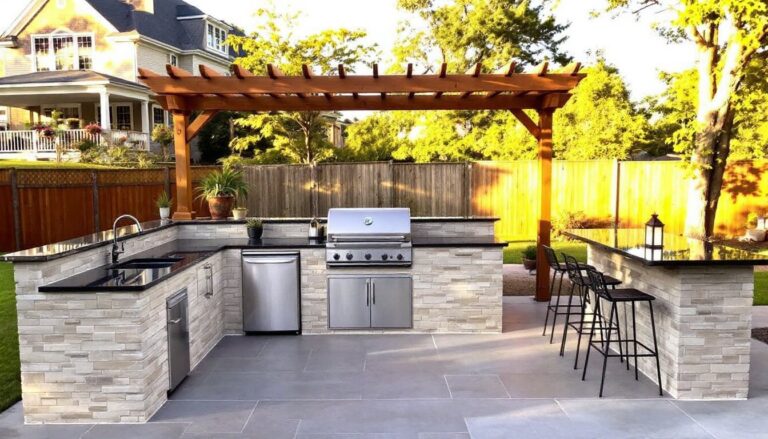
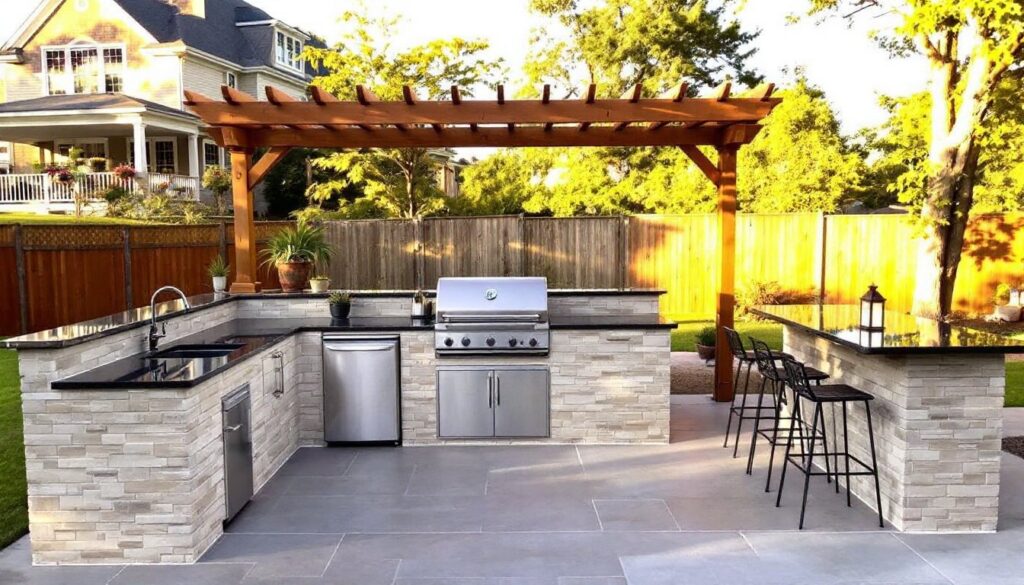
Natural stone veneer transforms concrete block bases into architectural features. This thin-cut stone (3/4 to 1-1/2 inches thick) is mortared directly to masonry substrates, creating the appearance of solid stone construction at a fraction of the weight and cost. Limestone, sandstone, and fieldstone are popular choices, with regional availability affecting pricing ($8-25 per square foot for materials).
For load-bearing structures, the underlying CMU (concrete masonry unit) core provides the structural integrity while veneer handles aesthetics. This dual-layer approach meets building codes for stability while allowing design flexibility. Always use a weather-resistant barrier and proper flashing at horizontal surfaces to prevent water infiltration behind the veneer.
Stacked stone (also called ledger stone) offers a contemporary textured look with interlocking pieces that install faster than irregular fieldstone. Corner pieces simplify transitions, and most manufacturers provide matching flat pieces for cap stones. Z-brick and similar brands offer stacked stone in both natural stone and manufactured options.
Manufactured stone veneer costs 30-50% less than natural stone and weighs less (8-12 pounds per square foot), reducing structural requirements. Quality products like those featured in garden design publications are nearly indistinguishable from natural stone at normal viewing distances. Check for products rated for freeze-thaw durability if you live where temperatures drop below freezing.
Design Styles for Stone Outdoor Kitchens
Stone adapts to virtually any design aesthetic when paired with appropriate materials and layout strategies. Matching your outdoor kitchen style to your home’s architecture creates cohesive flow between indoor and outdoor spaces.
Rustic/Mediterranean style uses rough-cut stone, arched openings, and earth-tone palettes. Irregular limestone or sandstone veneer paired with stucco accents creates the look of old-world villas. Terra cotta tile accents, wrought-iron hardware, and copper range hoods complete the aesthetic. This style appears frequently in Southern home designs featuring covered outdoor living areas.
Contemporary/Modern designs favor clean lines with smooth stone surfaces. Large-format granite or limestone cut in geometric patterns, combined with stainless steel appliances and minimal ornamentation, creates architectural impact. Cantilevered countertops, integrated lighting strips, and floating benches emphasize horizontal planes. Concrete countertops stained to mimic stone offer a cost-effective modern alternative.
Traditional/Classic style employs brick combined with stone accents, symmetrical layouts, and formal proportions. A central grill flanked by matching storage cabinets and uniform stone columns creates balanced composition. Granite countertops with bullnose or ogee edges add refinement. This approach complements colonial, craftsman, and traditional home styles.
Farmhouse/Country aesthetics blend reclaimed materials with natural stone. Stacked stone bases topped with butcher-block or concrete counters, open shelving with barn-wood shelves, and vintage-style hardware create relaxed, functional spaces. This style resonates with country home enthusiasts seeking informal entertaining areas.
L-shaped and U-shaped layouts work best for outdoor kitchens, creating efficient work triangles between grill, refrigeration, and prep areas. Island configurations suit larger yards and allow multiple cooks to work simultaneously. For properties with covered outdoor structures, integrate the kitchen under the roofline to extend usability in all weather conditions.
Essential Features to Include in Your Stone Outdoor Kitchen
Smart feature selection separates functional outdoor kitchens from glorified grill stations. Base decisions on how you actually entertain, not magazine spreads.
Built-in grilling stations anchor most designs. A 36-inch grill suits most families: serious grillers opt for 42-48 inch units with multiple burners and infrared zones. Leave 3-inch clearance between grill sides and combustible materials (6 inches is safer). Install shutoff valves for gas lines within easy reach but away from the heat source. Natural gas lines require professional installation and permitting in most jurisdictions: propane offers more flexibility but needs tank storage planning.
Counter space requirements depend on cooking style. Allocate 24-30 inches on each side of the grill for plating and tool access. An additional 36-48 inch prep zone elsewhere on the counter handles ingredient staging. Consider refrigerated drawers or an outdoor-rated refrigerator to eliminate trips inside, figure 4-6 cubic feet of cold storage minimum.
Storage solutions keep tools and supplies protected. Stainless steel doors and drawer fronts resist corrosion better than painted options. Include at least one deep drawer for propane tanks, charcoal, or large pots. Add open shelving for decorative elements, but understand that exposed items get dusty and weathered.
Sinks and plumbing add convenience but complicate construction. A 15-17 inch bar sink handles vegetable washing and cleanup without dominating counter space. Outdoor plumbing requires freeze-proof fixtures or winterization procedures in cold climates. Many homeowners creating elegant outdoor spaces install hot water lines, useful but not essential.
Electrical requirements for lighting and small appliances require GFCI protection on all outdoor circuits. Plan for dedicated 20-amp circuits if adding a refrigerator, and include multiple weatherproof outlets at counter height. Most local codes based on NEC (National Electrical Code) require outlets within 6 feet of any prep surface. Hire a licensed electrician for this work.
Lighting design extends usability after sunset. Combine task lighting (LED strips under cabinets), ambient lighting (lanterns or pendant fixtures over bars), and accent lighting (uplights on stone features). All fixtures should carry UL wet location ratings if exposed to precipitation.
Overhead coverage dramatically improves comfort and protects appliances. A simple pergola offers partial shade: solid roof structures require beam sizing calculations based on span and snow loads. For extensive outdoor living projects, integrate the kitchen into covered pavilions with ceiling fans and heaters.
Seating and entertaining areas complete the space. A stone bar with 42-inch counter height accommodates bar stools and creates a social focal point. Allow 24 inches of counter width per seat. For dining, position tables 6-8 feet from cooking zones to keep guests away from smoke and heat.
Conclusion
Stone outdoor kitchens deliver long-term value when planned with realistic budgets and clear priorities. Start with a solid base structure, invest in quality stone materials suited to your climate, and add features incrementally as budget allows. Most importantly, ensure proper drainage, use freeze-proof construction methods in cold regions, and don’t skip permits for gas, electrical, or structural work. A well-built stone kitchen outlasts trends and weather, becoming a permanent asset that transforms how the space gets used year-round.