Table of Contents
ToggleAn outdoor kitchen without a backsplash is like a grill without a lid, it’ll work, but you’re missing a key layer of protection and polish. A well-chosen backsplash shields masonry or framing from grease splatter, moisture, and UV exposure while anchoring the design of the entire cooking zone. Whether someone’s flipping burgers on a basic built-in or working a full outdoor range with a pizza oven, the backsplash sets the visual tone and handles the mess. This guide covers weather-resistant materials, design styles from sleek modern to timeless rustic, and practical installation tips for DIYers ready to upgrade their backyard cooking space.
Key Takeaways
- A backsplash protects your outdoor kitchen from grease splatter, moisture, and UV damage while creating a wipeable, easy-to-clean surface behind the grill or cooktop.
- Outdoor kitchen backsplash ideas should prioritize weather-resistant materials like porcelain tile (PEI 4-5 rating), granite, slate, or quartzite that withstand freeze-thaw cycles and temperature swings.
- For modern designs, use large-format porcelain slabs in neutral tones; for rustic aesthetics, choose reclaimed brick, tumbled travertine, or stacked stone veneer to define the cooking zone visually.
- Use exterior-rated polymer-modified thinset and epoxy grout instead of standard interior products, as they resist moisture, staining, and cracking outdoors.
- DIY installation requires solid substrate prep, cement backer board for wood frames, expansion gaps filled with silicone caulk, and proper curing conditions to ensure longevity and prevent delamination.
Why Your Outdoor Kitchen Needs a Backsplash
A backsplash in an outdoor kitchen serves three critical functions: protection, cleanliness, and design cohesion. Without one, the wall surface behind the grill or cooktop absorbs grease, smoke stains, and water from rain or cleaning. Over time, untreated stucco, wood siding, or even stone can deteriorate, crack, or harbor mold.
From a practical standpoint, a backsplash creates a wipeable surface. Splatters from searing steaks or tomato-based marinades come off tile or stone far easier than they do off painted drywall or rough masonry. It also defines the cooking zone visually, much like a kitchen backsplash indoors separates counter from wall.
Finally, the backsplash ties together materials used elsewhere in the outdoor space, countertops, flooring, even the patio pavers. It’s an opportunity to introduce texture, color, or pattern that complements the grill, cabinetry, and surrounding landscape. Skipping it leaves the design feeling unfinished and the wall vulnerable to the elements.
Weather-Resistant Materials for Outdoor Kitchen Backsplashes
Outdoor backsplashes must withstand freeze-thaw cycles, UV exposure, moisture, and temperature swings that would destroy most indoor tile or adhesive. Material selection is not negotiable, choosing the wrong substrate or grout will lead to cracking, delamination, or efflorescence within a season.
Natural Stone Backsplash Ideas
Granite, slate, and quartzite are top-tier choices for outdoor backsplashes. They resist moisture absorption (especially when sealed), handle heat without warping, and develop a natural patina that weathers gracefully. Granite slabs can be installed in large-format panels with minimal grout lines, reducing maintenance. Slate offers rich, earthy tones, charcoal, rust, green, that pair well with rustic or contemporary designs. Quartzite brings the veining of marble with far better durability.
Stacked stone veneer (ledger panels) creates texture and depth. These are typically 6-inch-high interlocking pieces that install over a water-resistant backer board. They work especially well behind grills in designs inspired by mountain lodges or landscape materials used in garden hardscaping. Just ensure the stone is rated for exterior use: interior-grade veneer can spall in freezing temps.
Travertine and limestone are beautiful but porous. They require annual sealing and aren’t ideal in freeze-prone climates unless honed and filled. For coastal or temperate zones, they add Mediterranean warmth.
Tile Options That Withstand the Elements
Porcelain tile is the workhorse of outdoor backsplashes. Look for tiles with a PEI rating of 4 or 5 (indicating high abrasion resistance) and a water absorption rate below 0.5%. Porcelain resists staining, doesn’t require sealing, and comes in formats that mimic wood, concrete, or natural stone. Large-format tiles (12×24 inches or larger) minimize grout lines, which are the weak point in any tiled surface.
Glazed ceramic tile works in covered outdoor kitchens or mild climates, but it’s less freeze-resistant than porcelain. If using ceramic, verify it’s rated for exterior use and install it over a mortar bed on cement backer board, not drywall.
Glass tile adds reflective sparkle and is inherently waterproof, but it requires epoxy grout for outdoor applications. Standard cement grout will crack. Glass is also more prone to thermal shock, don’t install it directly behind a high-BTU grill unless there’s a heat shield.
For adhesive, use a polymer-modified thinset rated for exterior or wet-area use. For grout, specify epoxy or high-performance urethane grout. Standard sanded grout will crack and stain outdoors. Many professionals designing upscale outdoor cooking areas rely on epoxy for longevity.
Modern Outdoor Kitchen Backsplash Designs
Modern outdoor kitchens favor clean lines, monochromatic palettes, and seamless transitions between materials. The backsplash should feel like an architectural plane, not an afterthought.
Large-format porcelain slabs in matte black, concrete gray, or crisp white deliver a sleek, gallery-like backdrop. Slabs measuring 5×10 feet can run floor-to-ceiling with a single seam, creating a continuous surface. Pair these with stainless steel appliances and minimalist cabinetry for a cohesive look.
Subway tile in a stacked bond (not offset) leans contemporary, especially in 3×12-inch or 4×16-inch formats with tight grout lines. White or light gray subway tile brightens the cooking area and reflects task lighting at night. Accent with a single horizontal stripe of contrasting tile at eye level for subtle detail.
Metallic or textured tile introduces industrial edge. Brushed stainless steel mosaic, copper penny rounds, or tiles with a hammered finish catch light and add tactile interest. These work best as accent strips rather than full-coverage, think a 6-inch band running the length of the countertop.
For a bold statement, consider a geometric or encaustic-pattern porcelain tile in black and white. It anchors the cooking zone without overwhelming the space, especially when paired with neutral countertops and cabinetry. When planning extensive outdoor living areas with multiple zones, repeating a signature tile pattern helps unify the design.
Rustic and Traditional Backsplash Styles
Rustic and traditional outdoor kitchens draw from farmhouse, Mediterranean, or lodge aesthetics. The backsplash should feel handcrafted, warm, and grounded in natural materials.
Reclaimed brick or brick veneer offers timeless appeal. Thin-cut brick tiles (½ inch thick) install like standard tile but deliver the heft and texture of full brick. Pair with natural stone countertops and wrought-iron hardware. Seal the brick with a penetrating sealer to prevent moisture absorption and efflorescence (the white, chalky buildup caused by salts migrating to the surface).
Tumbled travertine or terra-cotta tile in warm ochre, sienna, or cream evokes Tuscan villas. Arrange in a herringbone or diagonal pattern for added visual interest. These materials patina beautifully but need annual sealing, especially in wet climates. Inspiration for these styles often mirrors the warm, tactile materials featured in outdoor kitchen design galleries.
Natural stone mosaic in irregular shapes, river rock, stacked slate chips, or pebble sheets, adds organic texture. These work especially well in outdoor kitchens adjacent to water features or natural landscaping. Install over a waterproof membrane and use epoxy grout to lock everything in place.
Wood-look porcelain tile gives the appearance of weathered barn wood without the maintenance. Choose planks in 6×36-inch or 8×48-inch formats and install vertically for a modern-rustic hybrid look. Because it’s porcelain, it won’t rot, warp, or attract insects, ideal behind a grill where real wood would be a fire hazard.
Installation Tips for DIY Outdoor Backsplashes
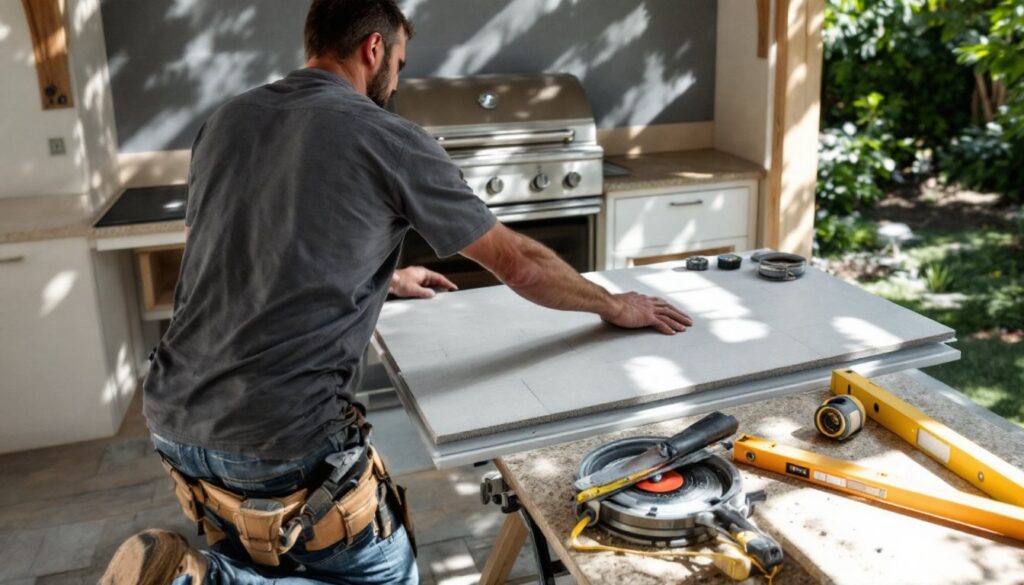
Installing an outdoor backsplash is within reach for an experienced DIYer, but it’s not a first-time tile project. Outdoor conditions demand precision in substrate prep, material selection, and weatherproofing.
Start with a solid substrate. The wall behind the backsplash must be structurally sound and water-resistant. For masonry (CMU block, poured concrete, stucco), clean the surface and apply a bonding primer before tiling. For wood-framed walls, install ½-inch cement backer board (like Hardie Backer or Durock) over the sheathing, fastening it with corrosion-resistant screws every 8 inches on-center. Tape seams with alkali-resistant mesh tape and thinset.
Use the right adhesive and grout. Standard interior thinset will fail outdoors. Use a polymer-modified or latex-modified thinset rated for exterior use (check the bag, it should say “exterior” or “wet areas”). For grout, epoxy grout is the gold standard. It’s waterproof, stain-proof, and flex-resistant, though it’s harder to work with than cement grout. If using cement grout, choose a high-performance, polymer-modified version and seal it annually.
Account for expansion. Outdoor temperature swings cause tile and substrate to expand and contract. Leave a ⅛-inch expansion gap where the backsplash meets countertops, corners, or appliances, and fill it with 100% silicone caulk (not grout). This allows movement without cracking.
Seal natural stone before and after grouting. Apply a penetrating sealer to stone tile before grouting to prevent grout haze from staining the surface. After grouting, apply a second coat to lock out moisture. Reseal annually or as recommended by the manufacturer.
Protect during curing. Thinset and grout need time to cure, and temperature matters. Avoid installing tile in temps below 50°F or above 90°F. Cover the fresh installation with plastic sheeting if rain is forecast within 72 hours. Rapid drying or freezing during cure will compromise the bond.
Safety gear: Wear safety glasses when cutting tile (especially porcelain, which can chip aggressively), a dust mask when mixing thinset or cutting with a wet saw, and knee pads for floor-level work. A wet saw with a diamond blade is essential for clean cuts on porcelain or stone. A manual tile cutter works for ceramic, but it won’t handle the density of outdoor-rated porcelain.
If the outdoor kitchen involves gas lines, electrical for lighting, or structural modifications, check local building codes. Some jurisdictions require permits for permanent outdoor structures. Complex projects that tie into a home’s exterior often pair well with broader backyard upgrades and outdoor amenities, and consulting a licensed contractor for the initial framing or utilities can save headaches down the line.