Table of Contents
ToggleNothing says “summer evening done right” like a cold drink poured at your own outdoor deck bar. Whether you’re hosting a backyard barbecue or unwinding after a long day, a well-designed bar turns a basic deck into a full-blown entertainment hub. You don’t need a contractor or a five-figure budget to make it happen. With smart planning, a few weekends, and the right materials, a deck bar becomes the anchor of your outdoor space, functional, stylish, and built to last.
Key Takeaways
- An outdoor deck bar eliminates indoor trips for refills and creates a dedicated zone for drinks while adding measurable home value and encouraging longer outdoor gatherings.
- Outdoor deck bar ideas range from rustic reclaimed wood designs to modern minimalist setups using composite materials, each requiring a bartop overhang of 10–12 inches for proper knee space.
- Budget-friendly DIY projects like pallet bars, composite deck board bars, and fold-down bars can be completed in one weekend for under $250 without requiring plumbing permits.
- Essential features including storage shelving, footrails, drainage systems, and GFCI-protected electrical outlets transform a basic bar into a fully functional entertainment hub.
- Layered lighting with task lighting under the bartop, accent landscape spotlights, and dimmable controls extends usability into the evening while maintaining conversation-friendly ambiance.
Why Add a Bar to Your Outdoor Deck?
A deck bar isn’t just about aesthetics. It solves real problems. No more running inside for refills. No more cluttered coolers tipping over on the planks. A fixed or semi-permanent bar creates a dedicated zone for drinks, prep, and glassware, keeping the main dining or seating area clear.
It also adds measurable value. Outdoor living features consistently rank high with buyers, and a thoughtfully integrated bar signals that the deck isn’t an afterthought. Beyond resale, it changes how homeowners use their space. A bar encourages longer evenings outside, more frequent gatherings, and a cleaner flow during events.
Finally, it’s one of the few projects that balances form and function without requiring plumbing or electrical (though both can be added). Most deck bars rely on gravity-fed beverage dispensers, portable ice bins, and LED strip lighting, none of which trigger permit requirements in most jurisdictions. Check local codes if adding outlets or a sink.
Design Styles for Your Deck Bar
The style should echo your deck’s existing materials and the home’s architecture. Trying to force a tiki vibe onto a mid-century modern ranch usually backfires. Instead, lean into what’s already working.
Rustic and Reclaimed Wood Bars
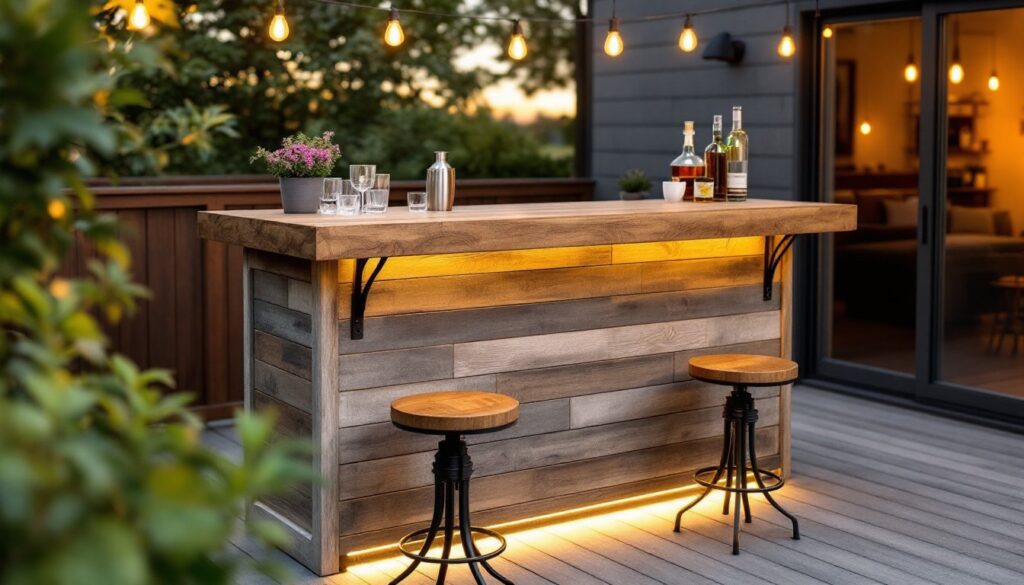
Reclaimed barn wood, weathered cedar, or pallet boards deliver instant character. The uneven grain and nail holes tell a story, and imperfections are part of the appeal. For structure, frame the bar with 2×4 studs (actual dimensions: 1.5″ × 3.5″) on 16-inch centers, then clad the front with horizontal or vertical planking.
Seal reclaimed wood with an exterior-grade penetrating oil or spar urethane. Raw wood weathers fast, and moisture wicks into end grain. For the bartop, consider a live-edge slab or butcher block treated with food-safe mineral oil and beeswax. Pair it with wrought iron brackets, Edison bulb string lights, and metal barstools.
This style works especially well when integrated with other outdoor living structures that emphasize natural materials and textures.
Modern Minimalist Deck Bars
Clean lines, flush surfaces, and a tight material palette define the minimalist approach. Think composite decking wrapped around a simple frame, stainless steel countertops, and integrated LED strips. Composite materials like Trex or TimberTech resist fading and require zero annual maintenance, ideal for a bar that sees spills and sun exposure.
For the bartop, consider 12-inch-wide composite fascia boards or a single piece of marine-grade plywood clad in aluminum or powder-coated steel. Minimize visible fasteners by using hidden deck clips or pocket screws filled and sanded smooth. Mount hardware (bottle openers, hooks, towel bars) with stainless steel to avoid rust streaks.
Keep the footprint tight, 48 inches wide by 24 inches deep is enough for a blender, an ice bucket, and a row of glasses. Overhang the bartop by 10–12 inches to create knee space for barstools.
Essential Features to Include in Your Deck Bar
A deck bar needs more than a flat surface. These features separate a functional setup from a glorified shelf.
Bartop Overhang: Extend the top 10–12 inches past the base to allow room for knees and elbows. Support overhangs longer than 10 inches with L-brackets or corbels rated for the load.
Storage: Add open shelving below the bartop for glassware and bottles. Use 3/4-inch exterior-grade plywood or composite shelving supported by adjustable shelf pins. If the bar backs up to a railing, consider cabinets with marine-grade hinges.
Drainage: If the bar includes a small sink, slope the deck slightly (1/4 inch per foot) away from the house. Run a 1.5-inch PVC drain line to daylight or a gravel-filled dry well. Sinks require a vent and proper trap, this is where most DIYers should call a plumber.
Footrail: A 1.5-inch diameter steel or brass tube mounted 8–9 inches off the deck gives guests a comfortable place to rest their feet. Secure it with floor-mounted brackets every 3–4 feet.
Electrical: Even without a permit, adding a weatherproof outlet (GFCI-protected) makes blenders, string lights, and phone chargers possible. Run 12/2 NM-B cable through conduit if surface-mounted. Consult the NEC (National Electrical Code) or hire a licensed electrician if you’re unsure.
Many homeowners find inspiration in covered outdoor living designs that incorporate similar utility features.
DIY Deck Bar Ideas You Can Build This Weekend
These projects require basic carpentry skills, a circular saw or miter saw, a drill, and a level. All can be completed in 8–12 hours of work.
Pallet Bar: Source heat-treated (HT-stamped) pallets, disassemble them, and reassemble as a three-sided bar frame. Sand thoroughly to remove splinters, then stain with an exterior wood stain. Add a bartop made from two 2×10 boards edge-glued and sanded smooth. Seal with three coats of spar urethane. Cost: under $100 if pallets are free.
Composite Deck Board Bar: Use leftover composite decking to wrap a simple 2×4 frame. Cut boards to length with a fine-tooth blade (composite can chip). Fasten with stainless screws, pre-drilling to prevent cracking. Top with a single composite fascia board or a piece of 3/4-inch PVC trim board for a seamless look. Cost: $150–250 depending on material.
Fold-Down Bar: Hinge a 2×12 cedar board (actual: 1.5″ × 11.25″) to the deck railing with heavy-duty strap hinges. Add a folding leg bracket rated for 200+ pounds. When not in use, it folds flat against the rail. Finish with exterior stain and polyurethane. Cost: $75–125. This setup works great on narrow decks where permanent structures eat up too much space.
Cinder Block and Timber Bar: Stack 8×8×16-inch concrete blocks (no mortar needed) in a U-shape, then cap with a pair of 4×6 pressure-treated timbers (actual: 3.5″ × 5.5″). Blocks provide built-in cubbies for storage. Finish the timber with deck stain. Cost: $100–150. Heavy and stable, no anchoring required.
For additional design ideas, platforms like Better Homes & Gardens regularly feature seasonal outdoor projects with step-by-step instructions.
Safety note: Wear safety glasses when cutting, a dust mask when sanding, and hearing protection with power saws. Pressure-treated lumber contains preservatives, wear gloves and wash hands before eating.
Lighting and Ambiance Tips for Your Outdoor Bar
Good lighting extends usability into the evening and sets the mood without overpowering conversation.
Task Lighting: Mount a 12V LED strip under the bartop overhang, aimed down at the prep surface. This illuminates glassware and cutting boards without glare in guests’ eyes. Use a dimmable transformer for control. Avoid bright white LEDs, opt for warm white (2700–3000K).
Accent Lighting: String lights work, but they’re overused. Instead, try low-voltage landscape spotlights aimed up at nearby trees or architectural features. This creates ambient wash without cluttering the bar itself. Outdoor bar collections often emphasize subtle, layered lighting.
Safety Lighting: If the bar is near stairs or a railing edge, install step lights or low-profile deck lights (usually solar or 12V). These should be code-compliant if your deck is elevated more than 30 inches (check local IRC requirements).
Candles and Lanterns: For special occasions, flameless LED candles or propane lanterns add warmth. Real candles are fine if enclosed in glass hurricanes and placed away from overhangs.
Dimmers and Timers: A smart plug or low-voltage dimmer gives control over brightness and on/off schedules. Set lights to auto-dim after 10 PM to keep neighbors happy.
Design resources like Hunker regularly cover outdoor lighting trends and product comparisons worth checking before you buy.