Table of Contents
ToggleBuilding an outdoor kitchen on your deck isn’t just about grilling burgers, it’s about extending your living space and creating a hub for entertaining that rivals any indoor setup. With the right planning, even a modest deck can accommodate a functional cooking station that handles everything from weeknight dinners to weekend cookouts. This guide walks through the practical considerations, design strategies, and material choices that turn a basic deck into a fully equipped outdoor kitchen. Whether working with a compact footprint or a sprawling platform, these ideas help homeowners maximize space, navigate structural requirements, and choose features that actually get used season after season.
Key Takeaways
- Outdoor kitchen on deck ideas require verifying structural load capacity first, as built-in grills and stone countertops can exceed 500 pounds and may need reinforced joists or support posts.
- Compact decks benefit from a linear galley layout with built-in or drop-in grills, vertical storage, and multi-functional fixtures that maximize usable space without overwhelming the deck.
- Durable materials like stainless steel (304-grade), granite, and marine-grade polymer resist weather, rust, and moisture better than painted wood or standard indoor cabinetry.
- Essential features including 24-36 inches of prep countertop, weatherproof storage, task lighting, and water access transform a basic grilling station into a fully functional outdoor kitchen.
- Check local building codes for gas line permits, electrical GFCI protection, and clearance requirements (typically 10 inches from combustibles) before finalizing your outdoor kitchen layout.
- Bar seating with proper structural support and shade solutions like pergolas or awnings enhance both functionality and entertainment value while extending seasonal usability.
Why Build an Outdoor Kitchen on Your Deck?
An outdoor kitchen on a deck offers advantages that go beyond backyard aesthetics. First, decks provide a level, raised platform that often requires less site prep than ground-level installations, no excavation, grading, or patio laying. If the deck already exists, adding a kitchen becomes a matter of structural evaluation and fixture placement rather than ground-up construction.
Decks also position kitchens closer to the house, shortening the walk for supplies, plumbing hookups, and electrical runs. This proximity reduces installation costs and makes it easier to run a gas line or connect to an existing water supply. Homeowners gain convenience without sacrificing the outdoor experience.
From an entertaining standpoint, elevated decks create natural gathering zones. Guests can move between indoor and outdoor spaces without tracking through grass or mud. The cook stays part of the conversation instead of isolated in a corner of the yard. For homes with limited yard space, utilizing an existing deck maximizes square footage that might otherwise sit underused.
Essential Design Considerations Before You Start
Structural capacity comes first. Standard residential decks are built to support 40-50 pounds per square foot (live load), but outdoor kitchens add concentrated weight from grills, countertops, and masonry. A built-in grill and stone countertop can easily exceed 500 pounds in a single footprint. Consult the deck’s original plans or hire a structural engineer to verify load-bearing capacity. Reinforcing joists or adding support posts may be necessary, especially for older decks.
Clearances and codes matter. Gas grills require minimum clearances, typically 10 inches from combustibles on sides and back, per manufacturer specs. Many jurisdictions require permits for permanent gas line installations, and electrical outlets need GFCI protection rated for outdoor use per NEC Article 210.8. Check local building codes before drilling or running utilities.
Weather exposure affects material longevity. Decks face rain, snow, UV, and temperature swings. Stainless steel appliances and marine-grade polymer cabinetry hold up better than painted wood or standard indoor cabinetry. Plan for drainage, standing water accelerates rot. If the deck lacks a roof, consider adding a pergola or pavilion to protect high-value appliances and extend usability into wet months, similar to the approach many covered outdoor living projects take.
Utility access determines layout flexibility. Running a natural gas line requires a licensed plumber and permits in most areas. Propane offers portability but means tank swaps. Water lines need frost-proof shutoff valves if the climate freezes. Electrical circuits should be dedicated 20-amp lines for refrigerators or outlets. Map these before finalizing the layout.
Compact Outdoor Kitchen Ideas for Small Decks
Small decks demand ruthless prioritization. A linear galley layout works well: grill on one end, prep counter in the middle, mini fridge or storage on the other. This keeps the work triangle tight and leaves space for a bistro table or a couple of chairs.
Built-in grills save floor space compared to freestanding models. A drop-in propane grill with a fold-down side shelf or cutting board cover maximizes surface area without adding permanent bulk. Portable carts offer flexibility, they can be wheeled off when not in use, freeing up deck real estate for seating.
Vertical storage reclaims square footage. Wall-mounted magnetic knife strips, hooks for utensils, and shallow shelves keep essentials accessible without eating into the deck footprint. A narrow 18-24 inch deep countertop provides enough room for plate staging without dominating the space.
Combination fixtures do double duty. A grill cart with built-in storage holds propane tanks, tools, and seasonings in one unit. Compact beverage coolers that slide under counters keep drinks cold without requiring a full-size refrigerator. For tight budgets and small footprints, a high-quality grill and a simple countertop beat an overcrowded setup with underused features.
Must-Have Features for a Functional Deck Kitchen
Countertop space is non-negotiable. Plan for at least 24-36 inches of prep surface adjacent to the grill. Granite, concrete, and tile withstand heat and weather: avoid laminate, which delaminates under moisture. Stainless steel offers durability but shows fingerprints and can heat up in direct sun.
Storage keeps the deck organized. Base cabinets with marine-grade plywood or polymer construction resist warping. Drawers beat shelves for frequently accessed items like grilling tools and spices. If the deck lacks a roof, use weatherproof containers or plan for removable drawer inserts that can be brought inside during off-season.
Lighting extends usability after dark. Task lighting over the grill and prep areas prevents accidents and undercooked food. LED strip lights under counters or inside cabinets add ambiance without drawing heavy power. Install on a dedicated circuit with weatherproof junction boxes and covers per NEC standards.
Sink and water access transform a grilling station into a true kitchen. A small bar sink (15-18 inches) handles rinsing vegetables and washing hands. Homeowners often explore ideas that make alfresco dining more seamless, and water access is central to that. Frost-proof hose bibs or a drain line that slopes away from the deck prevent winter damage. If plumbing isn’t feasible, a large insulated beverage tub with ice works as a low-tech alternative.
Refrigeration keeps ingredients fresh and drinks cold. Compact outdoor-rated refrigerators handle humidity and temperature fluctuations better than repurposed indoor units. For budget builds, a quality cooler on casters offers portability and insulation without the electrical hookup.
Material and Layout Options That Work Best
Stainless steel dominates outdoor kitchens for good reason, it resists rust, handles heat, and cleans easily. Look for 304-grade stainless for cabinets and fixtures: 430-grade corrodes faster in coastal or high-humidity climates. Brushed finishes hide scratches better than polished.
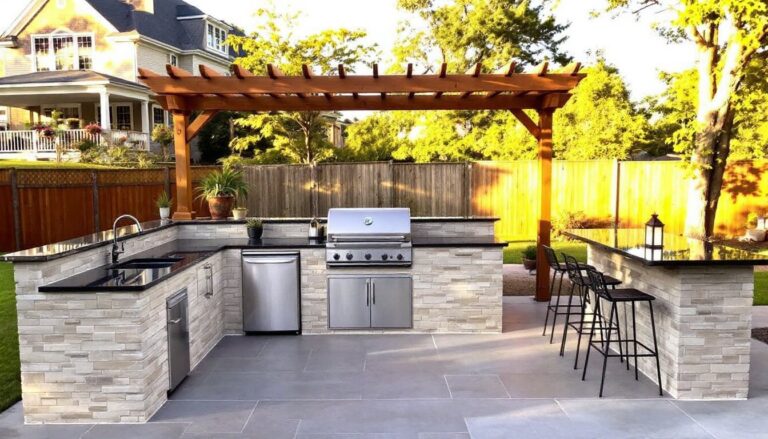
Stone and masonry add visual weight and durability. Granite countertops handle hot pans without scorching. Stacked stone veneer over a concrete board backer creates a high-end look without the cost of solid stone. Avoid thin brick veneer directly on wood decking, it needs a non-combustible substrate and proper flashing.
Composite and polymer materials offer weather resistance at lower cost. HDPE (high-density polyethylene) cabinetry won’t rot, warp, or fade. It’s lighter than wood or stone, reducing deck load. Marine-grade plywood with waterproof veneer works for DIYers comfortable with finishing and sealing, though it requires annual maintenance.
Layout configurations depend on deck shape and traffic flow. L-shaped layouts tuck into corners, leaving the center open for dining. Island setups work on larger decks, creating a social focal point where the cook faces guests. Straight-line galley arrangements fit narrow decks and keep utilities consolidated on one side. Designing options similar to outdoor living structures can provide inspiration for integrating kitchens into broader entertaining zones.
Decking material under the kitchen matters. Composite decking resists stains and scratches better than softwood but can melt under dropped coals or extreme heat. Porcelain tile or stone pavers over a waterproof membrane create a fireproof zone around grills. Some builders frame a separate section with cement board and tile where the grill sits, transitioning to composite or wood elsewhere for comfort underfoot.
Stylish Finishing Touches and Decor Ideas
Backsplashes protect walls and add personality. Subway tile, mosaic patterns, or stacked stone panels dress up the space behind sinks and grills. Use thinset mortar rated for exterior use and seal grout lines annually to prevent water intrusion.
Bar seating turns the kitchen into a social hub. A 12-15 inch countertop overhang accommodates standard bar stools. Ensure the deck structure supports the cantilevered load, corbels or knee braces help if the span feels bouncy. Weatherproof cushions with quick-dry foam keep seats comfortable after rain. Experts at The Kitchn often recommend bar-height counters for maximizing interaction during meal prep.
Shade and privacy improve comfort. Retractable awnings, pergolas with louvered roofs, or shade sails block sun without permanent obstruction. Lattice panels or tall planters with ornamental grasses create visual separation from neighbors without requiring fence permits. String lights, lanterns, or pendant fixtures over the bar add ambiance and functionality.
Outdoor-rated decor completes the look. Stainless steel or powder-coated hardware resists corrosion. Potted herbs (basil, rosemary, thyme) double as garnish and greenery. For broader design ideas, The Spruce offers extensive guides on outdoor styling. Avoid delicate textiles or untreated wood accents, they’ll mildew or warp within a season. Choose materials that age gracefully or are easy to replace when weathered.
Conclusion
An outdoor kitchen on a deck combines accessibility, efficiency, and entertainment value when planned with structural realities and weather in mind. Prioritize load capacity, code compliance, and durable materials over trendy finishes that won’t survive a season. Whether building compact or sprawling, focus on features that match actual cooking habits, most homeowners use their outdoor kitchens more when setup and cleanup stay simple.