Table of Contents
ToggleA pergola provides shade and structure. A fire pit extends the season. But when homeowners combine both, they create a true outdoor living hub, a spot that invites people outside even when temperatures drop. The pairing solves two common backyard challenges: lack of defined space and underused square footage after summer ends. With thoughtful design, proper material selection, and attention to safety, a pergola-fire pit combination becomes the most-used feature on the property. This guide walks through design styles, placement strategies, material choices, and the features that turn a simple setup into a year-round retreat.
Key Takeaways
- Combining a pergola with a fire pit creates a year-round outdoor living space that homeowners use five months longer than standalone features alone.
- Outdoor pergola ideas with fire pit designs require careful attention to clearance requirements—gas pits need 80-84 inches of overhead clearance, while wood-burning models require 10+ feet to prevent ignition of combustible materials.
- Choose fire-resistant materials like cedar, redwood, or powder-coated aluminum for your pergola frame to enhance safety and durability when paired with a fire pit.
- Modern minimalist and rustic wooden pergola styles each offer distinct aesthetics; modern designs integrate built-in gas fire pits with sleek metal frames, while rustic setups emphasize natural wood and stacked stone.
- Enhance your pergola fire pit area with string lighting, built-in seating, retractable canopies, non-combustible flooring, and outdoor-rated ceiling fans to maximize usability and comfort across seasons.
- Always verify local fire codes and property line requirements before installation, position the structure to direct smoke away from seating and your home, and keep a fire extinguisher nearby for safety.
Why Combine a Pergola and Fire Pit in Your Outdoor Space
A standalone fire pit works, but it doesn’t solve the sun problem during daylight hours. A pergola without a heat source sits empty once evenings cool off. Together, they create a functional zone that homeowners actually use across seasons.
The pergola defines the boundary of the space, creating a room-like feel without walls. It anchors furniture placement, provides a framework for lighting and fans, and offers partial shade during the day. The fire pit introduces warmth and a focal point, pulling people together and extending usability into fall and spring, sometimes even mild winter nights in temperate zones.
From a practical standpoint, this combination maximizes return on investment. Instead of two separate features competing for yard space, the integrated design concentrates traffic, simplifies electrical runs for lighting, and creates a clear destination for entertaining. The pergola also offers mounting points for overhead features like retractable canopies or string lights, while the fire pit below provides ambient warmth and a natural gathering spot. Many homeowners report using their outdoor spaces five months longer after adding this pairing compared to a pergola or fire pit alone.
Design Styles for Pergolas with Fire Pits
Modern Minimalist Pergola with Built-In Fire Pit
Modern designs favor clean lines, metal framing, and integrated features. Aluminum or powder-coated steel pergolas pair naturally with gas fire pits that feature linear burners and tempered glass surrounds. The fire element often sits flush with a poured concrete or composite deck surface, eliminating the visual clutter of standalone bowls.
Color palettes lean toward blacks, grays, and whites. Furniture follows suit, modular sectionals with low profiles and weatherproof cushions in neutral tones. Overhead, the pergola might include motorized louvered slats for adjustable shade and rain protection, a feature that fits the modern emphasis on control and convenience.
This style works especially well on smaller lots where every square foot counts. The built-in fire pit eliminates tripping hazards, and the streamlined pergola frame keeps sightlines open. Expect to budget more upfront for materials and installation, but the low-maintenance finishes and durable construction pay off over time.
Rustic Wooden Pergola with Stone Fire Pit
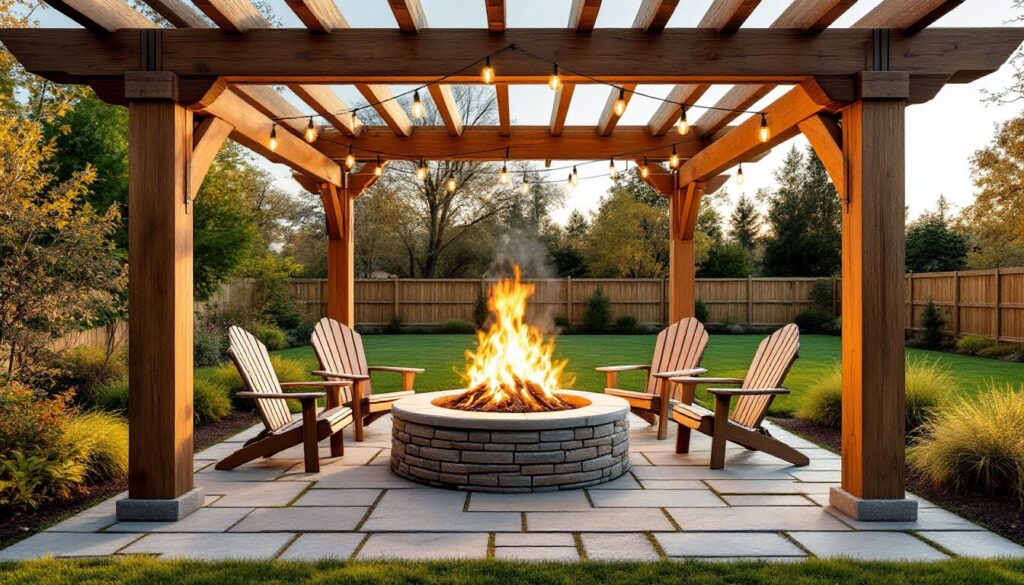
Rustic designs emphasize natural materials, texture, and a softer, lived-in aesthetic. Cedar or redwood pergolas with chunky 6×6 posts and 2×8 or 2×10 rafters create substantial overhead presence. Staining or leaving the wood to weather naturally reinforces the organic feel.
The fire pit in this setup typically features stacked stone or fieldstone, either in a traditional round bowl or a square design. Wood-burning models fit the aesthetic better than gas, though they do require more maintenance and produce smoke. Surrounding the pit with flagstone, decomposed granite, or gravel instead of hardscape keeps the look grounded and rustic.
Furnishings lean toward Adirondack chairs, wooden benches, and wrought-iron accents. String lights or lanterns hung from the pergola beams add ambiance without disrupting the natural vibe. This style suits larger properties with established landscaping and works especially well when the homeowner wants the space to feel like an extension of a garden or wooded setting. When planning your rustic setup, consider how various outdoor living structures can blend with natural landscapes.
Safety Considerations and Placement Tips
Combining open flame and overhead structure demands attention to clearances and fire safety. Gas-powered fire bowls typically require a minimum of 80-84 inches of clearance between the flame and any combustible surface above, including pergola beams. Wood-burning pits need even more, often 10 feet or greater, and produce sparks that can ignite untreated wood.
If the pergola uses pressure-treated lumber or naturally fire-resistant species like cedar, the risk drops but doesn’t disappear. Applying a fire-retardant coating to the underside of beams adds a layer of protection. For extra peace of mind, some homeowners install a metal heat shield between the fire pit and pergola, though this can affect aesthetics.
Placement relative to the home and property lines also matters. Many jurisdictions require fire pits to sit at least 10-15 feet from structures, including houses, fences, and sheds. Check local fire codes and homeowner association rules before breaking ground. If the property sits in a wildfire-prone area, additional restrictions or outright bans on open flames may apply.
Consider prevailing wind direction. Positioning the pergola so smoke drifts away from seating, and away from the house, makes the space more enjoyable. Finally, always keep a fire extinguisher or hose nearby. Spark screens for wood-burning pits are non-negotiable, and gas models should include an accessible shutoff valve.
Material Choices for Fire Pit-Friendly Pergolas
Wood pergolas offer the most design flexibility and a warm, traditional look, but they require careful species selection. Cedar and redwood resist rot and insects naturally and handle heat exposure better than pine or fir. Pressure-treated southern yellow pine works for posts and beams but needs staining or sealing to prevent warping and checking.
Wood does need maintenance. Plan to reapply stain or sealant every 2-3 years, and inspect beams annually for signs of heat damage if the fire pit sees heavy use. For wood-burning setups, applying a fire-retardant treatment to the underside of rafters reduces risk.
Aluminum and steel pergolas eliminate most fire concerns. Powder-coated aluminum won’t rust, requires no refinishing, and handles heat without degrading. Steel frames offer even more strength, supporting heavier shade structures or retractable canopies, though they cost more and may require occasional touch-ups if the coating chips.
Metal pergolas pair naturally with gas fire pits and modern designs. They’re also the go-to choice in coastal areas where salt air accelerates wood deterioration. The trade-off is a higher upfront cost and a more industrial aesthetic that doesn’t suit every property.
Vinyl pergolas occasionally appear in big-box stores, but they’re not recommended near open flames. Vinyl can warp or melt under heat, and most manufacturers explicitly warn against pairing them with fire features. Homeowners looking to establish a cohesive outdoor living space should prioritize materials that balance aesthetics with fire safety.
Essential Features to Enhance Your Pergola Fire Pit Area
A pergola and fire pit establish the bones of the space, but the details make it livable. Start with lighting. String lights or Edison bulbs hung in a zigzag pattern across the pergola beams provide ambient light without overwhelming the fire’s glow. For task lighting, add LED downlights mounted to the pergola’s posts or beams, especially if the area doubles as an outdoor dining zone.
Built-in seating maximizes space and eliminates the need to haul furniture in and out. L-shaped benches with storage underneath work well for smaller pergolas, while larger setups can accommodate sectional sofas or even a combination of benches and movable chairs. If using cushions, invest in quick-drying outdoor foam and solution-dyed acrylic fabrics that resist fading and mildew.
Retractable canopies or shade sails extend usability during the day. Mounting hardware to the pergola’s frame allows homeowners to pull shade over the seating area when the sun’s high and retract it at night to open up the sky. For year-round comfort, consider adding an outdoor-rated ceiling fan to the pergola. It circulates air on hot days and helps disperse smoke on calm evenings.
Flooring choices matter, too. Concrete pavers, natural stone, or poured concrete provide a non-combustible surface that handles foot traffic and spills without issue. Gravel or decomposed granite works for rustic designs but can migrate over time and may need edging to stay contained. Avoid wood decking directly under the fire pit unless using a fireproof mat or pad rated for the purpose.
Finally, think about side tables, storage, and accessories. A weatherproof storage box keeps firewood, fire starters, and blankets within reach. Small side tables, metal or stone, not wood, provide a spot for drinks without cluttering the space. And if the pergola includes electrical access, adding outlets for music, phone charging, or decorative accents turns the area into a true outdoor room. Many homeowners also draw inspiration from elegant outdoor living designs to refine their finishing touches.