Table of Contents
ToggleA backyard deck isn’t just a wooden platform, it’s where summer mornings start with coffee, where dinners stretch into evenings, and where a plain yard becomes the spot everyone wants to hang out. Whether you’re planning a complete build or breathing new life into an existing structure, the right deck decorating ideas can turn square footage into something special. This guide walks through proven outdoor deck ideas that balance function, style, and real-world durability, with specific materials, layouts, and features that hold up to weather and weekly use.
Multi-Level Deck Designs for Added Dimension
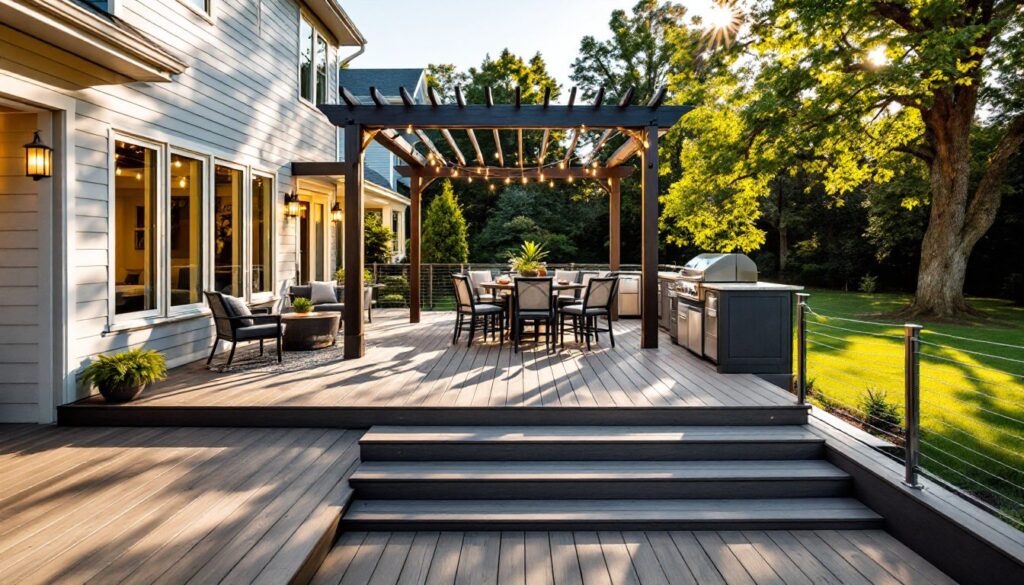
Multi-level decks solve two common backyard problems: sloped terrain and lack of visual interest. Rather than fighting a grade change with expensive retaining walls, a stepped deck follows the natural contour while creating distinct zones for cooking, lounging, and dining.
Design Approach: Plan each level with a clear purpose. The upper tier typically hosts the grill and prep area for easy kitchen access, while lower platforms accommodate seating or a fire pit. Steps between levels should meet IRC requirements, 7¾” maximum rise and 10″ minimum tread depth, but many builders use gentler ratios (6″ rise, 12″ tread) for a more relaxed flow.
Structural Considerations: Each level requires its own ledger board attachment (if connected to the house), properly sized beams, and frost-line footings. Consult local codes: some jurisdictions require engineered plans for decks with elevation changes exceeding 30″. The framing gets complex where levels meet, so this isn’t a first-timer project unless you’re confident reading span tables and cutting stair stringers.
Material Note: Composite decking works well for the walking surfaces, but stick with pressure-treated lumber (minimum .40 pcf retention for ground contact) for all framing. The dimensional stability of composites helps prevent boards from cupping on the lower, shadier tiers where moisture lingers.
These outdoor living structures create natural gathering zones without walls or railings interrupting sightlines.
Built-In Seating and Storage Solutions
Built-in benches deliver two wins: they eliminate the need to store (or replace) cheap patio chairs, and they define the deck’s perimeter without the visual weight of solid railings.
Bench Construction Basics: Frame benches at 18″ seat height and 16–18″ depth for comfortable sitting. Use 2×4 or 2×6 decking for the seat surface, spaced ⅛–¼” apart for drainage. Back support isn’t required but makes a huge difference, angle it 10–15 degrees off vertical and set the bottom rail about 16″ above the seat.
Storage Integration: Hinged bench tops turn wasted space into gear stash. Frame a waterproof box beneath the seat using the same joist hangers and ledger techniques as the main deck. Line the interior with ½” pressure-treated plywood, and add stainless steel piano hinges (3″ screws into solid blocking). Vent holes drilled in the floor prevent mildew.
Safety & Code: Built-in benches can sometimes count toward railing requirements if they’re 24″ or taller measured from the deck surface, but verify with your local inspector. If the bench backs up to a deck edge higher than 30″ off grade, you’ll likely need a 36″ guardrail behind or above the bench.
Pro Tip: Pre-drill all fastener holes in composite bench boards. Without it, you’ll crack ends or strip screws. Use trim-head screws color-matched to the decking, and countersink slightly so clothing won’t snag.
For simple deck ideas that maximize function, storage benches beat standalone furniture every time.
Deck Lighting Ideas for Ambiance and Safety
Lighting transforms a deck from daytime-only to usable after sunset, and it’s a code requirement in many areas for stairs and elevation changes.
Three Layers to Consider:
- Task Lighting: Illuminate cooking zones, steps, and transitions. LED step lights (typically 12V DC, 1–2W per fixture) mount into riser faces or post caps. For stairs, code often requires lighting at each tread or a continuous light source.
- Ambient Lighting: Post-cap lights, string bulbs, or recessed deck lights set the mood without harsh glare. Stick with 2700–3000K color temperature for warm, inviting tones. Avoid anything above 4000K unless you want a hospital vibe.
- Accent Lighting: Highlight railings, planters, or perimeter edges with low-voltage strip lights or puck lights. These draw the eye and define boundaries without flooding the space.
Installation Notes: Most deck lighting runs on 12V or 24V systems powered by a transformer tucked under the deck or in the garage. Bury cable runs 6–12″ deep in conduit if crossing the yard. Use outdoor-rated junction boxes and silicone-filled wire nuts, standard twist connectors corrode fast.
Wire Gauge: For runs over 50 feet, bump up from 16-gauge to 14-gauge or 12-gauge wire to prevent voltage drop. Dim lights at the end of a run usually mean undersized wire, not bad fixtures.
Smart Controls: Wi-Fi dimmers and timers add convenience, but make sure the transformer supports dimming (not all low-voltage systems do). Hardwired photocells turn lights on at dusk automatically.
These deck layout ideas work best when lighting is planned during framing, not tacked on later.
Creative Deck Railing and Privacy Options
Railings keep people from walking off edges, but they don’t have to look like chain-link translated into wood. Modern deck designs ideas favor clean lines, mixed materials, and strategic privacy where it’s needed.
Material Choices:
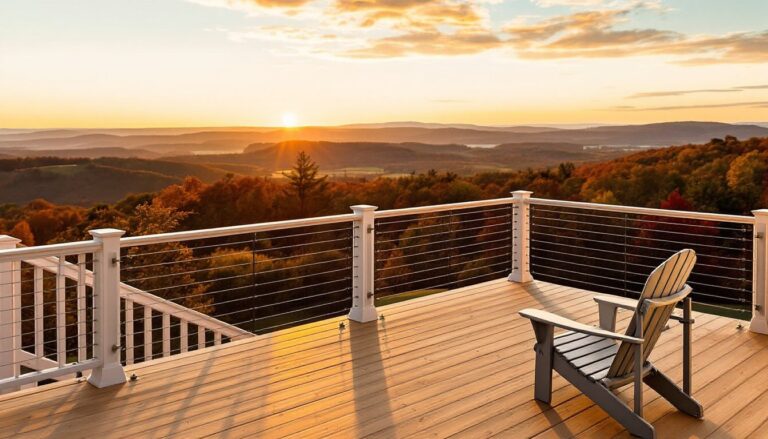
- Cable Railing: Stainless steel cables (⅛” or 3/16″ diameter) tensioned between posts preserve views and suit contemporary aesthetics. Spacing must not allow a 4″ sphere to pass through. Tension fittings require solid posts (4×4 minimum, but 6×6 works better). Budget $60–$100 per linear foot for quality systems.
- Tempered Glass Panels: Frameless or minimally framed glass offers unobstructed sightlines. Requires beefy posts and aluminum or stainless channels. Glass must be tempered or laminated safety glass. Expect $150–$250 per linear foot installed.
- Composite or Metal Balusters: These slot into top and bottom rails for a clean look with less maintenance than wood pickets. Spacing still governed by the 4″ sphere rule.
- Horizontal Slats: Wood or composite boards run horizontally between posts. Use 1×4 or 1×6 material, spaced to meet code. Creates a modern look but can feel enclosed if spacing is tight.
Privacy Screens: Lattice, louvered panels, or vertical slat walls block sightlines from neighbors without building a solid fence. Mount screens to dedicated posts outside the railing line, or integrate them into the railing itself. Pressure-treated 1×2 or 1×3 battens spaced 1–2″ apart offer adjustable privacy and airflow.
Code Check: Railings are required on any deck 30″ or more above grade (some jurisdictions say 24″). Top rail must be 36–42″ high, and it has to withstand 200 lbs of outward force. That means solid post anchoring, through-bolted or with structural post-to-joist brackets, not just toe-screwed.
Outdoor Kitchen and Dining Deck Features
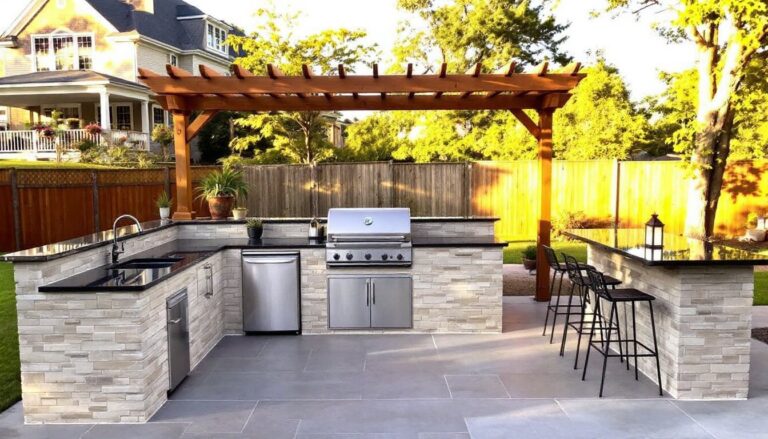
An outdoor kitchen turns a deck into a true second living space, but it requires more than rolling a grill onto the boards.
Structural Prep: Built-in grills, smokers, and refrigerators add significant point loads. A standard deck is engineered for 40–50 psf live load, but a 500-lb stone countertop or ceramic grill concentrates weight. Beef up framing under kitchen zones with doubled joists or blocking, and consider a dedicated footing for heavy islands.
Utility Runs: Gas lines require a licensed plumber and must meet local fuel gas codes (typically NFPA 54/ANSI Z223.1). Black iron or CSST (corrugated stainless steel tubing) are common: flexible copper is not code-compliant for gas. Electrical outlets need GFCI protection and weatherproof covers. Plumbing for a sink means freeze-proof drainage or winterization.
Countertop Materials: Granite, concrete, and tile handle weather and heat. Avoid laminate or untreated wood, they’ll delaminate or rot. Seal natural stone annually. Stainless steel frames and doors resist corrosion better than painted steel.
Layout Tips: Position the grill at least 10 feet from the house (fire codes) and away from overhangs or combustible siding. Allow 36–48″ clearance behind the cook for safe movement. An L-shaped or U-shaped layout keeps everything within a step or two.
Dining Zones: Built-in tables save space but lack flexibility. Instead, frame a level pad and use a freestanding table that can be moved or swapped seasonally. If you do build in, go 30″ high for a bar-height counter or 28–29″ for standard dining.
Many homeowners find that outdoor living room setups complement kitchen zones by creating distinct entertaining areas.
According to research on hardscaping and wood decks, proper material selection and installation are critical for outdoor kitchen longevity.
Low-Maintenance Decking Materials to Consider
Wood deck ideas often start with pressure-treated pine or cedar, but modern composites and PVC have changed the maintenance calculus.
Pressure-Treated Lumber:
- Pros: Affordable ($2–$4 per linear foot for 5/4×6 boards), widely available, accepts stain and paint.
- Cons: Requires annual cleaning, staining every 2–3 years. Prone to splintering, warping, and checking. Look for .40 or .60 pcf retention ratings for above-ground or ground-contact use.
- Species Upgrade: Southern Yellow Pine is standard, but Hem-Fir and ACQ-treated Douglas Fir offer better dimensional stability.
Cedar and Redwood:
- Pros: Natural rot resistance, beautiful grain, doesn’t need chemical treatment.
- Cons: Expensive ($5–$10 per linear foot), still requires sealing to prevent UV graying. Softer than treated pine, dents more easily.
- Best Use: Visible surfaces, railings, or small decks where aesthetics justify cost.
Composite Decking (Wood-Plastic Blend):
- Pros: No staining, resists rot and insects, 25+ year warranties common. Won’t splinter. Brands like Trex, TimberTech, and Fiberon dominate.
- Cons: Higher upfront cost ($4–$8 per linear foot), can retain heat in direct sun, limited color-change options later. Some early-generation products had mold issues, stick with capped composites for better moisture resistance.
- Fastening: Most use hidden clips or grooved edges. Follow manufacturer joist-spacing specs (often 12″ or 16″ on-center).
PVC Decking:
- Pros: 100% synthetic, most moisture-resistant option, lightest color options available. Won’t fade as much as composites.
- Cons: Most expensive ($6–$12 per linear foot), can feel slippery when wet, requires specific fasteners (stainless steel or coated).
- Expansion: PVC expands/contracts more than wood or composite, leave ¼” end gaps and don’t overdrive screws.
Tropical Hardwoods (Ipe, Cumaru, Tigerwood):
- Pros: Extremely dense, 25–50 year lifespan, no treatment needed, naturally fire-resistant.
- Cons: Very expensive ($8–$15 per linear foot), hard on saw blades, requires pre-drilling for every fastener. Heavy, may need beefier framing.
- Sustainability: Look for FSC-certified sources.
Pro Pointer: Whatever material you choose, proper ventilation under the deck matters. Leave 6″ minimum clearance from soil, ensure cross-flow between joists, and don’t let debris pile up. Trapped moisture kills even the best materials.
Many builders recommend options discussed in guides from Better Homes & Gardens when selecting deck materials for regional climates.
For wooden deck ideas with minimal upkeep, capped composite or PVC outperforms traditional lumber in humid or coastal zones.
Conclusion
A well-designed deck extends living space, increases home value, and creates a gathering spot that gets used. Focus on sound framing, choose materials that match your maintenance tolerance, and don’t skip the details, proper lighting, code-compliant railings, and thoughtful layout make the difference between a deck that works and one that wows. Plan thoroughly, measure twice, and when in doubt, call in help for structural or electrical work.