Table of Contents
ToggleRedesigning a living room isn’t about chasing magazine covers, it’s about creating a space that works for how people actually live. Whether it’s accommodating family movie nights, hosting friends, or just needing a functional corner for reading, the right interior design for living rooms balances aesthetics with practical needs. Unlike other renovation projects that require permits and structural know-how, updating a living room is largely cosmetic work within most DIYers’ reach. This guide walks through the essential elements, from layout planning and color selection to lighting and budget-friendly projects, that transform a tired room into a space that’s both comfortable and visually compelling.
Key Takeaways
- Start your living room home interior design with a solid floor plan, measuring walls and furniture dimensions to ensure pieces fit the space without overcrowding.
- Use the 60-30-10 color rule (60% dominant, 30% secondary, 10% accent) and match your palette to natural light direction to create mood and visual balance.
- Invest in quality furniture with hardwood frames and proper springs; test sofas in person and ensure scale matches your room’s dimensions to avoid costly mistakes.
- Layer three types of lighting—ambient, task, and accent—with dimmer switches to create flexibility and eliminate the harsh, flat look of a single overhead fixture.
- Add personality and depth by intentionally mixing textures, patterns, and odd-numbered accessories; avoid uniform fabrics and evenly spaced decor that read as sterile.
- Transform your space affordably with DIY projects like accent wall painting, floating shelves, and throw pillow reupholstering—most require only basic tools and 2–8 hours of effort.
Understanding Your Living Room Layout and Space Planning
Before selecting a single paint chip or furniture piece, assess the room’s bones. Start by measuring wall lengths, ceiling height, and noting permanent features like windows, doors, electrical outlets, and HVAC vents. Use a tape measure and sketch a rough floor plan, graph paper works, or free tools like RoomSketcher handle the digital version.
Identify the room’s focal point. Most living rooms default to the TV or a fireplace, but architectural features like large windows or built-in shelving can anchor the layout too. Arrange seating to face or complement this focal point, keeping traffic flow in mind. Leave at least 30-36 inches of clearance for walkways between furniture groupings.
Measure twice, buy once. Before purchasing a sofa or sectional, tape out dimensions on the floor to visualize scale. An oversized sectional might look great online but turn a 12×14-foot room into an obstacle course. For contemporary interior design in living rooms, balance is key, furniture should fill the space without crowding it.
Consider the room’s function. If it doubles as a home office or playroom, zoning becomes critical. Use area rugs to define separate zones or position furniture to create visual boundaries without walls. This living room styling idea works especially well in open-concept homes.
Choosing the Right Color Palette for Your Living Room
Color sets the room’s mood, but it also affects perceived size and light levels. Start with the 60-30-10 rule: 60% dominant color (walls), 30% secondary color (upholstery, large furnishings), and 10% accent color (pillows, artwork, accessories).
Light matters. North-facing rooms get cooler, indirect light, warmer tones like soft beige, cream, or warm grays prevent the space from feeling cold. South-facing rooms with abundant natural light can handle cooler palettes like sage, slate blue, or crisp white without looking sterile. Test paint samples on multiple walls and observe them at different times of day before committing to gallons.
Sheen affects durability and appearance. For living room walls, eggshell or satin finishes balance cleanability with a subtle glow, they’re easier to wipe down than flat paint and less reflective than semi-gloss. Ceilings typically stay flat white to minimize imperfections.
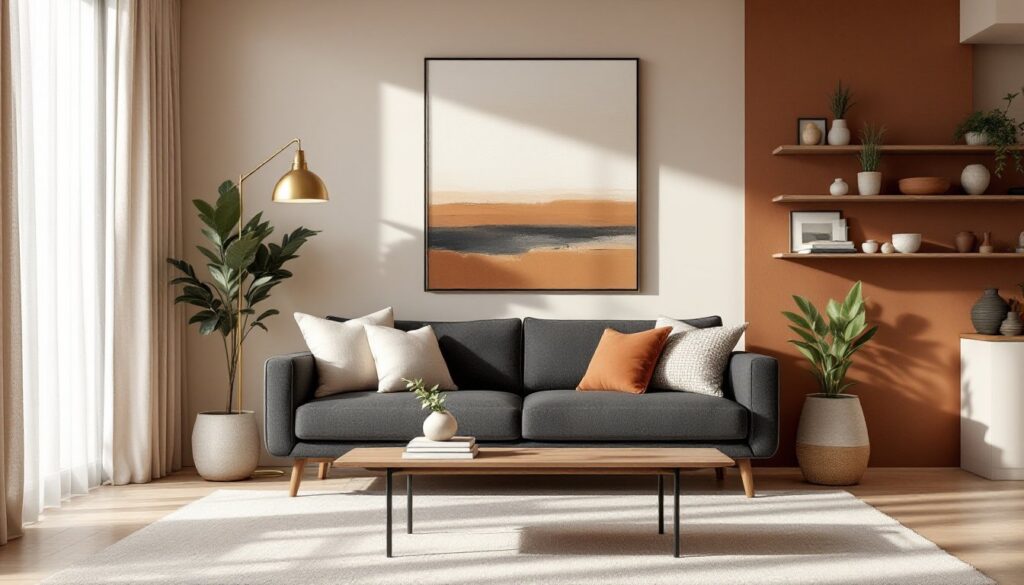
For living room aesthetic ideas that feel current in 2026, consider earthy neutrals with layered depth, think terracotta paired with warm whites and natural wood tones, or charcoal gray balanced by brass accents and greenery. Avoid trends that’ll date quickly: timeless palettes make future updates easier. Exploring creative accent walls can introduce bold color without overwhelming the space.
Selecting Furniture That Balances Comfort and Style
Furniture is the biggest investment in living room design decor, choose pieces that’ll last beyond the first year. Start with the sofa. Test it in person if possible: sit for at least ten minutes to gauge cushion support and seat depth. Look for hardwood frames (kiln-dried oak or maple) and eight-way hand-tied springs if budget allows, they outlast stapled frames and sinuous springs.
Sectionals vs. sofa-and-chairs. Sectionals maximize seating in smaller or square rooms but can dominate the space. A sofa paired with accent chairs offers flexibility, rearrange for different occasions or move pieces to other rooms. For contemporary aesthetics, low-profile furniture with clean lines and exposed legs creates an airy feel compared to skirted, overstuffed pieces.
Coffee table scale matters. The table should sit about two-thirds the length of the sofa and leave 14-18 inches between the table edge and seating for comfortable legroom. Glass or acrylic tables work in tight spaces by reducing visual weight. Solid wood or metal adds heft and durability, especially important in homes with kids or pets.
Storage furniture earns its keep. Consider ottomans with hidden compartments, console tables with shelves, or media units that conceal electronics and clutter. Evaluate each piece’s function: decorative-only furniture is fine as an accent, but core pieces should pull double duty.
Don’t forget scale: a 96-inch sectional overwhelms a 10×12 room, while a loveseat looks lost in a 20×20 great room. Proportion beats trends every time.
Lighting Design: Layering for Ambiance and Functionality
Lighting makes or breaks a living room. A single overhead fixture creates harsh shadows and flat ambiance, layer three types instead: ambient, task, and accent lighting.
Ambient lighting provides overall illumination. Ceiling fixtures, recessed cans, or track lighting handle this base layer. For an 8-foot ceiling in a 12×15 room, plan for about 3,000-4,000 lumens total (roughly 30-40 watts of LED). Dimmer switches are non-negotiable, they adjust mood and reduce glare during movie nights. Note: If adding recessed lighting, hire a licensed electrician: it involves cutting into ceilings and connecting to existing circuits per NEC Article 410.
Task lighting targets specific activities, reading, working, or hobbies. Floor lamps beside seating, adjustable swing-arm lamps by desks, or table lamps on side tables handle this. Use LED bulbs rated 2700-3000K (warm white) for living spaces: cooler temps feel clinical.
Accent lighting adds drama: picture lights highlight artwork, uplights graze textured walls, or LED strips behind floating shelves create depth. Battery-powered puck lights are a DIY-friendly option that skip electrical work entirely.
Many home decorating strategies emphasize layering light sources to add flexibility and warmth. Mix light heights, overhead, eye-level, and low, to eliminate dead zones. Avoid placing all lamps at the same height: it flattens the room visually.
Adding Personality with Textures, Patterns, and Accessories
A well-designed living room layers materials and textiles to add tactile interest. Flat surfaces and uniform fabrics read as sterile, successful living room decorating ideas mix textures deliberately.
Textiles create warmth. Layer throw pillows in varied fabrics: linen, velvet, wool, or cotton blends. Stick to odd numbers (three or five pillows per sofa) and vary sizes, pair 20×20-inch pillows with 16×16 or lumbar styles. Throws draped over sofa arms or chair backs add visual softness.
Rugs anchor furniture groupings. In a seating area, the rug should extend under at least the front legs of all furniture, ideally all legs. For a standard sofa and coffee table setup, an 8×10-foot or 9×12-foot rug works in most living rooms. Natural fibers like jute or sisal add texture but show stains: wool or synthetic blends offer durability in high-traffic areas.
Patterns need balance. Combine one large-scale pattern (bold geometric or floral on curtains), one medium (striped pillows), and one small (textured weave on a throw). Keep patterns within the same color family to avoid visual chaos.
Accessories finish the space but require restraint. Group decor in odd-numbered clusters (three candlesticks, five small frames) rather than evenly spaced lines. Vary heights and materials, wood, metal, ceramic, glass, to add dimension. Sources like Dwell and Homedit showcase how professional designers balance pattern and texture without overcrowding.
Wall art should relate to furniture scale. A single large piece (40×60 inches) works above a sofa, or create a gallery wall with frames spaced 2-3 inches apart. Use a level and painter’s tape to mock up arrangements before hammering nails.
Budget-Friendly DIY Projects to Elevate Your Living Room
Transforming a living room doesn’t require a full gut job. These DIY projects deliver impact without contractor-level skills or budgets.
Paint an Accent Wall
A single painted wall adds depth for the cost of a gallon (covers ~400 sq ft). Choose the wall behind the sofa or the one facing the entry. Prep properly: fill nail holes with spackle, sand smooth with 120-grit paper, prime if covering dark colors, then apply two coats. Tools needed: roller, angled brush, painter’s tape, drop cloth. Time: 4-6 hours including dry time.
Build Floating Shelves
Floating shelves add storage and display space. Use 1×10 or 1×12 pine boards cut to length (60 inches works for most walls). Mount with heavy-duty floating shelf brackets rated for 50+ lbs, screwed into wall studs. Locate studs with a stud finder: if studs don’t align, use toggle bolts in drywall rated for the shelf’s load. Finish with stain or paint.
Materials: Lumber (~$15-25 per board), brackets ($20-40 per pair), screws, finish.
Tools: Circular saw or miter saw, drill, level, stud finder.
Time: 2-3 hours for a pair of shelves.
Reupholster Throw Pillows
Refresh tired pillows with new fabric. Measure existing covers, add 1-inch seam allowance on all sides, cut fabric, and sew with a sewing machine (or hand-stitch if patient). Use medium-weight cotton, linen, or canvas, avoid stretchy knits. Add an invisible zipper for removable covers.
Cost: $5-10 per pillow in fabric.
Time: 30-45 minutes per pillow.
Install Crown Molding
Crown molding elevates a room’s finish. For beginners, use pre-primed MDF or pine molding in 3.5-inch or 4.5-inch profiles. Cut 45-degree miters at inside and outside corners with a miter saw. Attach to wall studs and ceiling joists with a brad nailer and 1.5-inch 18-gauge brads, then fill nail holes, caulk seams, and paint.
Safety note: Wear safety glasses and hearing protection when using power saws and nailers.
Cost: $1.50-3 per linear foot.
Time: 6-8 hours for an average room.
Simple refresh strategies like swapping hardware on built-ins, updating light switch plates, or refinishing a coffee table deliver visual change with minimal cost. Prep work, cleaning, sanding, priming, determines success more than skill level.
Conclusion
Effective living room interior design isn’t about following a single trend, it’s about creating a functional, comfortable space that reflects how people actually use the room. Start with layout and space planning, choose durable furniture scaled to the room, layer lighting for flexibility, and add personality through curated textures and accessories. Most updates fall within the DIY-friendly zone, making it one of the more approachable home improvement projects. Tackle one element at a time, measure carefully, and don’t skip prep work, the difference between a polished result and a sloppy one usually comes down to patience, not skill.