Table of Contents
ToggleFlorida homeowners have a distinct advantage when it comes to outdoor living: 365 days of cooking weather. An outdoor kitchen isn’t just a summer luxury here, it’s a year-round extension of the home that can handle everything from weeknight grilling to hosting large gatherings. But Florida’s climate also presents unique challenges. High humidity, intense UV exposure, afternoon thunderstorms, and salt air in coastal areas demand specific material choices and design strategies. This guide walks through practical outdoor kitchen ideas tailored to Florida’s conditions, covering everything from weather-resistant materials to smart layout decisions that keep cooks comfortable even in July.
Key Takeaways
- Florida’s year-round warm climate makes outdoor kitchen ideas practical 12-month investments that reduce indoor heat buildup and air conditioning costs, unlike seasonal kitchens in colder regions.
- Weather-resistant materials are essential: choose marine-grade polymer or 316-grade stainless steel for cabinets, sealed granite or porcelain tile for countertops, and porcelain pavers for flooring to withstand humidity and salt air.
- Roof structures with at least 8 feet of clearance, proper ventilation, and GFCI-protected electrical circuits are non-negotiable design considerations that prevent water intrusion and ensure safety in Florida’s climate.
- Layout your outdoor kitchen to leverage prevailing easterly winds for smoke dispersal, position the grill under shade, and create a work triangle with separate cooking and dining zones for comfort and functionality.
- Budget-conscious homeowners can build a functional outdoor kitchen starting at $2,000–$5,000 with a quality freestanding grill and shade structure, then phase in built-in features like refrigeration and sinks over time.
Why Florida’s Climate Is Perfect for Outdoor Kitchens
Florida’s subtropical and tropical climate zones eliminate the winter shutdown that outdoor kitchens face in most of the country. Average temperatures range from the mid-60s to low 90s°F, meaning outdoor cooking spaces get used 12 months a year instead of sitting idle for six.
This year-round usability translates to real return on investment. Homeowners aren’t paying for a seasonal amenity, they’re adding functional square footage that reduces indoor heat buildup during cooking (a significant benefit when air conditioning costs peak in summer) and creates flexible entertaining space for holidays, game days, and weekend meals.
The long growing season also supports lush landscape integration, allowing outdoor kitchens to blend seamlessly with tropical plantings, herb gardens, and shade trees that mature quickly. But, this same climate brings challenges: humidity accelerates mildew growth on porous surfaces, UV radiation degrades plastics and sealants faster, and coastal properties face corrosive salt spray. Design choices must account for these factors from the start.
Essential Design Considerations for Florida Outdoor Kitchens
Successful outdoor kitchens in Florida balance durability, ventilation, and protection from the elements. These aren’t indoor kitchens that happen to be outside, they require different structural and material approaches.
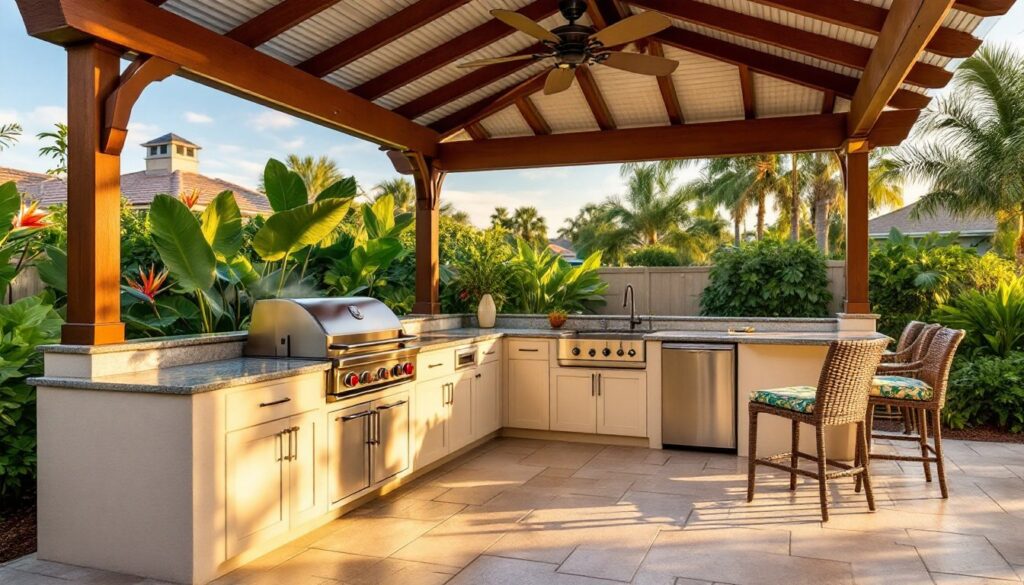
Roof and shade structures are non-negotiable. A pergola with a retractable canopy, a fixed gable roof with proper pitch for rain runoff, or a combination roof-and-wall structure protects both equipment and people. Aim for at least 8 feet of overhead clearance to allow heat and smoke to dissipate. If the kitchen is attached to the house, ensure the roof tie-in is properly flashed and sealed, improper connections are a leading source of water intrusion.
Ventilation becomes critical in covered outdoor kitchens. Even with open sides, smoke and grease vapor can accumulate under a roof. Some homeowners install outdoor-rated range hoods (rated for wet locations per NEC Article 410), though these add cost and require electrical permits. Alternatively, position grills near open edges where prevailing breezes carry smoke away naturally.
Electrical and plumbing both require permits in most Florida jurisdictions. All outdoor receptacles must be GFCI-protected and weatherproof (per NEC). Plan for dedicated 20-amp circuits for refrigerators and multiple 15-amp circuits for lighting and small appliances. If adding a sink, check local codes, some counties require a grease trap for outdoor sinks connected to the main sewer line.
Weather-Resistant Materials That Withstand Humidity and Salt Air
Material selection determines how well an outdoor kitchen holds up to Florida’s climate. Choosing the wrong countertop or cabinetry can mean costly replacements within five years.
Countertop options:
- Granite and quartzite: Natural stone handles heat, UV, and moisture well. Seal annually to prevent staining. Expect $60–$100 per square foot installed.
- Concrete (sealed): Custom-pourable, heat-resistant, but requires resealing every 1–2 years in humid climates.
- Porcelain tile: Budget-friendly ($15–$40/sq ft) and highly durable, but grout lines need regular maintenance to prevent mildew.
- Avoid: Laminate and most wood butcher blocks, both delaminate or warp rapidly outdoors.
Cabinet and storage materials:
- Marine-grade polymer (HDPE): Purpose-built for wet environments, resists rot, rust, and insects. Brands like NatureKast and Trex offer framed cabinet systems.
- Stainless steel (304 or 316 grade): Grade 316 includes molybdenum for added salt-air resistance, essential within 10 miles of the coast. Look for welded, not riveted, construction.
- Masonry block with stucco finish: Traditional Florida construction. Build the base structure from concrete block, then finish with stucco or stone veneer. Requires a concrete footer.
Avoid: Standard wood cabinetry, even exterior-grade plywood. Humidity will cause swelling, and termites are a constant threat.
Flooring:
- Porcelain pavers or tile: Rated for freeze-thaw cycles (relevant in North Florida) and slip-resistant when textured.
- Travertine or limestone pavers: Natural stone with good drainage, but requires sealing.
- Poured or stamped concrete: Cost-effective, but must include a non-slip finish and proper slope (1/4″ per foot minimum) for drainage.
- Avoid: Composite decking directly around grills (heat damage) and natural wood (splinters, rot, and maintenance).
Must-Have Features for Your Florida Outdoor Kitchen
A functional outdoor kitchen needs more than a grill and a cooler. These features make the space genuinely usable for everyday cooking, not just weekend barbecues.
Built-in grill: Choose between natural gas (requires a dedicated line from the meter, about $500–$1,500 to run depending on distance) or propane (more flexible for placement, but requires tank storage). Stainless steel grates and burners outlast cast iron in humid climates. Island-mount grills integrate cleanly: cart models offer flexibility but don’t weather as well.
Refrigeration: Outdoor-rated refrigerators and beverage coolers are built with sealed compressors and weatherproof vents. Standard indoor fridges will fail outdoors due to ambient temperature swings and moisture. Expect to spend $800–$3,000 depending on capacity.
Sink with hot and cold water: Running a water line outdoors requires trenching below the frost line (not deep in Florida, but local code varies). Install a backflow preventer if the sink connects to potable water, it’s required by most counties. Include a pull-down faucet for filling large pots. A small tankless water heater can provide hot water without running a line from the house.
Storage and prep space: Plan at least 36 inches of continuous counter space next to the grill for plating and prep. Drawers are more practical than cabinets for utensils and tools, install soft-close, stainless steel glides rated for outdoor use. If budget allows, add a warming drawer or a built-in trash pullout.
Lighting: Task lighting over prep and cooking areas is essential for evening use. LED strip lights under counters and inside cabinets add visibility without heat buildup. Pendant lights over a bar or dining counter create ambiance. All fixtures must be wet-location rated. Use a dimmer switch (outdoor-rated) for flexible lighting levels.
Ceiling fans: In Florida’s heat, airflow is everything. Install an outdoor-rated ceiling fan (UL-listed for damp or wet locations, depending on roof coverage). A 52-inch fan moves enough air for most kitchens and offers lighting integration. Many modern outdoor living spaces prioritize comfort features like fans and misters.
Smart Layout Ideas That Maximize Shade and Airflow
Layout affects how comfortable the cook stays and how efficiently the kitchen functions. In Florida, orientation and airflow trump aesthetics.
Orient the kitchen to prevailing breezes: Most of Florida experiences easterly trade winds. Position the kitchen so breezes cross the cooking zone, carrying heat and smoke away. Avoid placing the grill in a fully enclosed corner, it traps heat and odors.
Use the house or a privacy wall as a windbreak: Afternoon thunderstorms and occasional tropical systems bring gusty winds. Anchoring one side of the kitchen to the house or a solid masonry wall provides stability and reduces wind shear on the grill flame.
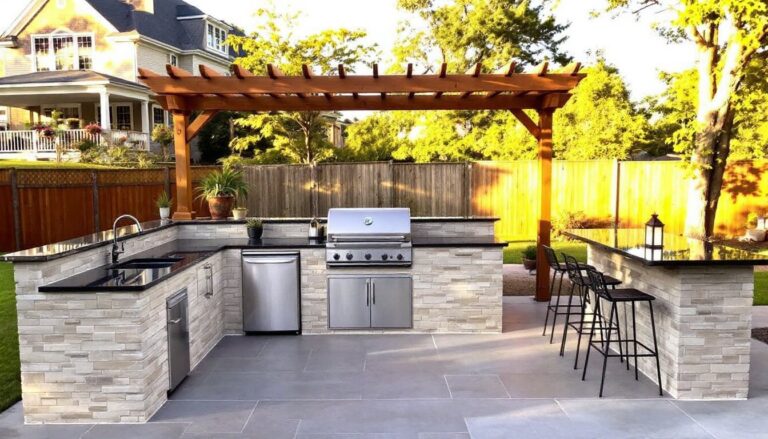
L-shaped or U-shaped layouts: These configurations create a natural work triangle (grill, sink, prep) and allow the cook to face guests. An L-shape works well for smaller yards (10×12 feet minimum footprint). U-shapes (12×14 feet or larger) offer maximum counter space and storage but require more square footage.
Bar seating with overhang: A 12-inch countertop overhang on the guest-facing side accommodates bar stools and keeps diners out of the active cooking zone. Standard bar height is 42 inches: counter height is 36 inches. Choose based on the adjacent seating area’s style.
Shade placement: Position the main prep and cooking area under a roof or pergola. If budget limits coverage, prioritize shade over the grill and primary counter, cooks will abandon an outdoor kitchen that feels like a solar oven. Retractable awnings add flexibility for cooler months when full sun is welcome.
Separate zones for cooking and dining: Even a few feet of separation between the active grill area and a dining table keeps smoke and heat away from guests. Thoughtful outdoor living structures help define these zones without requiring walls.
Budget-Friendly Florida Outdoor Kitchen Projects
A full custom outdoor kitchen can easily exceed $20,000, but homeowners can build functional cooking spaces for far less by prioritizing essentials and phasing construction.
Starter setup ($2,000–$5,000): Begin with a quality freestanding grill (Weber, Char-Broil, or similar, $400–$1,200), a weatherproof rolling cart for prep and storage ($150–$400), and a simple shade structure like a pop-up canopy or a DIY pergola kit ($300–$1,000). Add a portable cooler, a folding prep table, and string lights. This setup is fully functional and can be upgraded over time.
Mid-range built-in kitchen ($8,000–$15,000): Frame a simple island using concrete block or pressure-treated 2x4s with cement board sheathing. Finish with stucco, stone veneer, or tile. Install a built-in grill (drop-in models start around $800), a small outdoor fridge ($800–$1,200), and a sink with a cold-water line. Pour a concrete slab or lay pavers for flooring. Build a basic gable roof using 2×6 rafters and corrugated metal or polycarbonate panels ($1,500–$3,000 in materials for a 10×12 structure). DIYers comfortable with masonry, plumbing, and basic framing can complete this over several weekends.
DIY material choices that save money:
- Concrete block and stucco instead of stainless cabinetry: A standard 8x8x16-inch block costs about $2. A 6-foot base with two storage access doors runs $300–$500 in materials.
- Tile countertops instead of granite: Large-format porcelain tile ($5–$10/sq ft) installs over a cement board substrate. Total material cost for 30 square feet: $300–$500.
- Basic pergola instead of a custom roof: A 10×12 pressure-treated pergola kit costs $800–$1,500 and installs in a weekend. Add a retractable shade cloth ($150–$300) for rain and sun protection.
Where not to cut costs: Don’t skip permits for electrical or gas lines, failed inspections mean rework and fines. Don’t use indoor-rated appliances outdoors, they’ll fail within a year. Don’t scrimp on a proper base, outdoor kitchens need a level, stable foundation (concrete slab or compacted gravel with pavers). Settling or shifting will crack countertops and misalign doors.
Phased construction: Build the basic structure and cooking area first, then add features like a sink, refrigerator, or lighting as budget allows. Many homeowners start with a grill island and shade, then expand with a bar or dining pavilion the following year. Design inspiration from HGTV’s outdoor kitchen galleries can help prioritize features. Other homeowners find that studying elegant outdoor living setups provides ideas for phased upgrades.
Conclusion
Florida’s climate makes outdoor kitchens practical investments rather than seasonal luxuries, but only when designed with humidity, UV exposure, and storm resilience in mind. Prioritize weather-resistant materials, proper shade and ventilation, and layouts that leverage natural airflow. Whether building a full custom kitchen or starting with a simple grill island, focus on functionality first, upgrades can always follow once the core structure proves its value.