Table of Contents
ToggleAn outdoor kitchen pavilion isn’t just a cooking space, it’s a complete entertaining hub that extends your living area into fresh air and natural light. Whether you’re flipping burgers on a Wednesday night or hosting a weekend cookout, a well-designed pavilion provides shelter, function, and a serious upgrade to backyard appeal. With the right design approach, materials, and features, homeowners can create anything from a simple grill station to a fully equipped outdoor kitchen that rivals indoor setups. This guide walks through practical ideas, from rustic timber frames to sleek modern designs, plus tips on DIY builds and premium upgrades worth considering.
Key Takeaways
- An outdoor kitchen pavilion extends your living space with year-round weather protection and increases both usable square footage and property value.
- Outdoor kitchen pavilion designs range from budget-friendly DIY builds using pressure-treated lumber and poured concrete to luxury setups featuring built-in grills, pizza ovens, and misting systems costing $50,000+.
- Check local building codes early, as many jurisdictions require permits for structures over 120 square feet or those with electrical and plumbing hookups.
- Essential features for any pavilion include non-slip flooring with proper drainage, 24 inches of counter space on both sides of the grill, a utility sink, weatherproof storage, and layered task and ambient lighting.
- Material choices—from rustic timber and corrugated metal to modern steel frames and frameless glass—should align with your home’s architecture and climate zone.
- Plan utilities upfront, including GFCI-protected electrical circuits, properly sized gas lines, and frost-proof water supply, to avoid costly rework and ensure code compliance.
What Is an Outdoor Kitchen Pavilion and Why You Need One
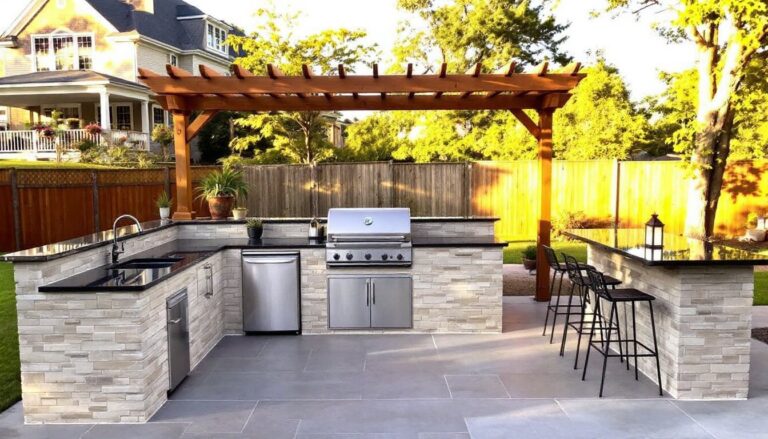
An outdoor kitchen pavilion is a freestanding or attached covered structure designed to house cooking equipment, prep surfaces, and often seating or dining areas. Unlike a simple patio umbrella or awning, a pavilion offers permanent overhead protection with posts supporting a solid or slatted roof. Most are built from wood, steel, or composite materials, typically ranging from 10×10 feet for a basic grill setup to 20×30 feet or larger for full-scale outdoor kitchens.
The main advantage is weather protection. Rain, intense sun, and wind won’t shut down your outdoor cooking plans. A pavilion also creates a defined outdoor room, which increases usable square footage and boosts property value. For homeowners who entertain frequently or live in regions with extended warm seasons, the pavilion becomes a year-round asset.
Before breaking ground, check local building codes. Many jurisdictions require permits for structures over a certain size (often 120 square feet) or those with electrical and plumbing hookups. If you’re planning a built-in grill, gas lines, or outdoor lighting, consult your local building department early to avoid costly rework.
Rustic Pavilion Designs with Natural Materials
Rustic pavilions lean into natural textures and earthy tones, making them a perfect fit for wooded lots or homes with farmhouse, cottage, or craftsman architecture. The backbone is usually rough-sawn or hand-hewn timber posts, often 6×6 or 8×8 Douglas fir, cedar, or reclaimed barn wood. These posts support heavy timber beams and rafters, sometimes left with visible joinery like mortise-and-tenon or decorative metal brackets.
Roof options include corrugated metal (affordable, durable, and great for shedding rain), wood shingles (classic but higher maintenance), or thatch for tropical or cottage aesthetics. A stone or brick accent wall behind the grill adds mass and heat resistance while reinforcing the rustic vibe. Flagstone or decomposed granite flooring completes the natural look and drains better than solid concrete.
For a DIY-friendly version, use pressure-treated 6×6 posts set in concrete footings spaced 8 to 10 feet apart. Attach 2×8 or 2×10 rafters with galvanized joist hangers, and top with metal roofing panels secured with foam-closure strips to prevent leaks. Many homeowners embrace covered outdoor living principles to extend seasonal use without straying from a natural aesthetic. Stain or seal all wood surfaces annually to protect against moisture and UV damage.
Modern Pavilions with Sleek Lines and Contemporary Features
Modern pavilion designs prioritize clean geometry, minimal ornamentation, and high-performance materials. Think flat or low-slope roofs, cantilevered overhangs, and structural steel or powder-coated aluminum frames. Roof decking might be tongue-and-groove cedar stained dark, or composite panels with integrated LED lighting channels.
Countertops lean toward polished concrete, quartz, or stainless steel, all of which handle weather and heat. Frameless glass panels can enclose one or two sides for wind protection without blocking sightlines, just ensure tempered glass rated for outdoor use. For a striking focal point, install a linear gas fire feature along the bar or prep counter.
Electrical and plumbing rough-ins should be planned early. Modern pavilions often include under-counter refrigeration, dishwashers, and instant hot water taps, all of which need code-compliant hookups. Hire a licensed electrician for any 240V circuits (required for many built-in grills and induction cooktops) and ensure all outdoor outlets are GFCI-protected per NEC standards. If your design involves structural steel or engineered connections, a permit and engineer-stamped plans are usually required.
Budget-Friendly DIY Pavilion Ideas
A functional outdoor kitchen pavilion doesn’t require a five-figure budget. Start with a simple gable or shed-roof frame using pressure-treated lumber. A 12×12-foot footprint provides enough space for a grill, small prep counter, and a couple of bar stools. Use 4×4 posts set 24 inches deep in concrete, spaced no more than 8 feet apart. Attach 2×6 rafters on 24-inch centers, and sheath with ½-inch exterior-grade plywood topped with rolled roofing or asphalt shingles.
Keep the countertop simple: poured concrete over a plywood base supported by a 2×4 frame is budget-friendly and customizable with integral color or acid stain. For a no-pour option, use concrete pavers or tile over cement board, both are DIY-friendly and weather-resistant.
Skip built-ins initially. A quality freestanding grill and a rolling cart for prep can be added immediately and upgraded later. Instead of permanent electrical, use outdoor-rated extension cords and solar-powered LED string lights until budget allows for a licensed electrician. Many outdoor living structures start modestly and evolve over time. Stain or paint all exposed wood, and apply a waterproof sealer to any horizontal surfaces to extend lifespan.
Luxurious Pavilion Concepts with Premium Amenities
High-end pavilions blur the line between indoor and outdoor kitchens, often featuring built-in grills with infrared burners, pizza ovens, smokers, and teppanyaki griddles. Countertops might be honed granite, leathered quartzite, or marine-grade polymer, all engineered to resist freeze-thaw cycles and UV fading. Under-counter storage includes stainless drawers, refrigerated wine coolers, and kegerators.
Climate control becomes a priority. Misting systems reduce ambient temperature by 20–30°F on hot days, while radiant patio heaters or a built-in fireplace extend use into cooler months. Motorized screens or retractable glass walls offer wind and insect protection without sacrificing views. Some designs incorporate alfresco dining zones that flow seamlessly from cooking to table.
Lighting should be layered: recessed downlights in the ceiling for task areas, LED strip lights under counters and along beams for ambiance, and pendant fixtures over bars or dining tables. All fixtures must be wet- or damp-rated depending on exposure. Audio systems with weatherproof speakers and smart home integration (controlled via app or voice assistant) are increasingly common. Budget $50,000–$150,000+ for a turnkey luxury pavilion, depending on size, finishes, and site prep.
Essential Features to Include in Your Outdoor Kitchen Pavilion
Regardless of style or budget, certain features improve function and longevity. Start with a durable, non-slip flooring material: stamped concrete, pavers, or natural stone work well and handle moisture better than wood. Ensure a slight slope (about ¼ inch per foot) to direct water away from cooking zones.
Adequate counter space is critical, plan at least 24 inches on either side of the grill for plating and prep. Include a utility sink with hot and cold water: a single-basin stainless or composite model resists rust and staining. Install a grease trap or proper drainage if your grill produces significant runoff.
Storage matters more than most DIYers anticipate. Weatherproof cabinets (stainless steel, marine-grade polymer, or sealed wood) keep utensils, propane tanks, and cleaning supplies protected. Pullout trash and recycling bins with tight lids prevent pest issues.
Lighting and ventilation are often afterthoughts but shouldn’t be. If the pavilion is enclosed or has a low ceiling, a vent hood rated for outdoor use prevents smoke buildup. Task lighting over the grill and prep areas should deliver at least 50 foot-candles of brightness. For evening entertaining, add dimmable accent lights.
Finally, consider utilities early. Electrical should include multiple 20-amp GFCI circuits for appliances and lighting. Gas lines (if using natural gas instead of propane) must be installed by a licensed plumber and sized correctly for BTU load. Water lines need frost-proof hose bibs or buried supply lines below frost depth to prevent winter damage. According to guidance from Hunker, homeowners should also factor in seasonal maintenance for outdoor structures.
Conclusion
Building an outdoor kitchen pavilion is a multifaceted project that balances design, function, and code compliance. Whether starting with a budget-friendly DIY frame or investing in a luxury setup with premium appliances, the key is planning for both immediate needs and future upgrades. Prioritize durable materials, proper utilities, and weatherproofing to ensure the pavilion serves well for years. With thoughtful design, it becomes a true extension of the home, one that handles everything from weeknight dinners to large gatherings without missing a beat.