Table of Contents
ToggleAn outdoor fireplace turns a backyard into a year-round gathering spot. Whether it’s a chilly fall evening or a cool summer night, the warmth and ambiance of an open flame make outdoor spaces more inviting. Unlike complex masonry projects that require contractors and deep pockets, simple outdoor fireplace designs can be built by confident DIYers or purchased ready-made. This guide covers budget-friendly builds, classic stone and brick options, portable solutions, and essential safety considerations to help homeowners create a functional focal point without the headache.
Key Takeaways
- Simple outdoor fireplace ideas like concrete block and metal barrel builds offer budget-friendly DIY options that homeowners can complete without hiring contractors.
- A concrete block fireplace requires 50–70 blocks ($2–$4 each) and fire brick lining, making it one of the most accessible and affordable outdoor fireplace designs for extending backyard seasons.
- Repurposed 55-gallon steel drums can be transformed into portable fireplaces for under $50, providing flexibility to move or store your outdoor fireplace between seasons.
- Stone and brick fireplaces require proper foundations and mortar work but deliver timeless aesthetics and excellent heat retention, though they typically need permits if over 3 feet tall.
- Maintain at least 10–15 feet of clearance between any outdoor fireplace and structures, trees, or rooflines, and use non-combustible surfaces like concrete or pavers underneath to prevent fire hazards.
- Prefabricated fireplace kits eliminate the need for masonry skills and often avoid permit requirements, though they sacrifice the heat retention and durability of permanent masonry builds.
Why Add an Outdoor Fireplace to Your Backyard?
An outdoor fireplace extends the usable season of a backyard by providing heat when temperatures drop. It creates a natural gathering spot for family and guests, much like an indoor hearth anchors a living room.
Beyond comfort, an outdoor fireplace can increase property value. Buyers often view outdoor living features as premium upgrades, especially in regions where outdoor entertaining is common. According to Southern Living, well-designed outdoor spaces with heating elements are among the most desirable backyard features.
Fireplaces also offer a safer, more contained alternative to open fire pits. With proper design, they direct smoke upward and reduce spark hazards. They’re versatile too, use them for ambiance, cooking, or even as a heat source for screened porches.
For homeowners planning a comprehensive outdoor retreat, a fireplace serves as both a functional and aesthetic anchor. The key is choosing a design that matches skill level, budget, and local codes.
Budget-Friendly DIY Outdoor Fireplace Designs
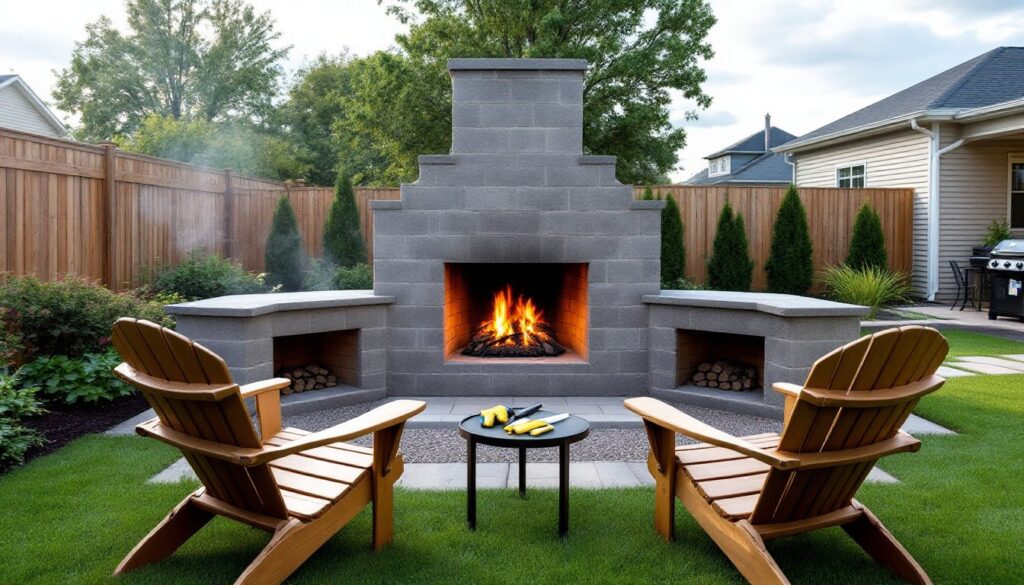
Concrete Block Fireplace
A concrete block fireplace is one of the most accessible DIY builds. Standard 8x8x16-inch concrete blocks (actual dimensions: 7⅝x7⅝x15⅝ inches) stack easily and cost around $2–$4 per block. A basic three-sided fireplace with a back wall and two short wings requires roughly 50–70 blocks, plus fire brick for the interior.
Materials needed:
- Concrete blocks (standard or split-face for texture)
- Fire brick (rated to 2,000°F+) for the firebox lining
- High-temperature mortar or refractory cement
- Gravel and sand for a level base
- Metal lintel or angle iron (if adding a mantel or cap)
Tools:
- Level, trowel, mason’s string
- Circular saw with masonry blade (for cuts)
- Rubber mallet
- Safety glasses and work gloves
Steps:
- Prep the base. Excavate 4–6 inches, fill with compacted gravel, then add a sand layer. Tamp and level. Some builders pour a concrete pad for added stability.
- Lay the first course dry to check spacing and layout. Use a level and square.
- Mortar subsequent courses, staggering joints like brickwork. Butter block ends and press firmly.
- Line the firebox with fire brick, leaving an air gap between the fire brick and outer blocks. This protects the concrete from cracking due to heat.
- Cap the structure with flat blocks, stone, or a poured concrete cap. Add a metal chimney cap if desired to improve draft.
Fire brick is critical, regular concrete will crack and spall under high heat. Plan for a firebox depth of at least 12 inches and a height of 24–30 inches for efficient drafting.
This design works well in areas that allow recreational fires without a permit, but always verify local codes. Some jurisdictions classify permanent structures differently than portable fire features.
Repurposed Metal Barrel Fireplace
A 55-gallon steel drum can be converted into a simple, rustic outdoor fireplace with minimal tools. This approach suits homeowners who want an industrial aesthetic or need a movable solution.
Materials:
- Steel drum (food-grade preferred: avoid drums that held chemicals)
- Angle grinder with cutting wheel
- High-temperature spray paint (optional, for rust prevention)
- Metal grate or mesh for firebox floor
- Concrete blocks or steel legs for elevation
Steps:
- Cut an opening on one side of the drum, roughly 18×18 inches, using an angle grinder. This becomes the firebox opening. Wear a respirator, safety glasses, and gloves, cutting steel produces sharp edges and sparks.
- Cut vent holes near the base (opposite side) to allow airflow. Drill or cut three to five 2-inch holes.
- Position a grate inside, elevated a few inches above the bottom to allow ash to fall and air to circulate.
- Elevate the drum on concrete blocks or weld steel legs. Keep the opening at a comfortable height (24–30 inches off the ground).
- Add a chimney pipe (optional) by cutting a hole in the top and fitting a stovepipe section. This improves draft and directs smoke upward.
This design is truly portable, it can be relocated as landscaping changes or stored during winter. It’s not as refined as masonry, but it’s quick, cheap (often under $50 if you source a free drum), and works well for casual setups.
Safety note: Never burn treated wood, plastics, or trash in any outdoor fireplace. Stick to seasoned hardwood or manufactured fire logs.
Simple Stone and Brick Outdoor Fireplaces
Stone and brick offer timeless aesthetics and excellent heat retention. A simple design uses a U-shaped layout: a back wall and two side walls, open at the front.
Fieldstone or flagstone can be dry-stacked for a rustic look, though mortared joints provide better stability and weather resistance. Expect to pay $4–$10 per square foot for natural stone, depending on type and region.
Standard clay bricks (dimensions: 3⅝x2¼x8 inches nominal) are easier to work with than stone and cost around $0.50–$1.50 per brick. Running bond (each brick overlaps the joint below by half) is the simplest pattern.
Basic construction steps:
- Pour a concrete footing (check local frost depth requirements). A 4-inch thick pad extending 6 inches beyond the fireplace footprint works for most non-structural designs.
- Lay the first course in mortar, checking level in all directions. Use Type N or Type S mortar, which handles moderate exposure.
- Build up the walls, staggering joints and keeping joints consistent (⅜–½ inch). Use a story pole or mark a level to keep courses even.
- Line the firebox with fire brick, same as with concrete block.
- Finish the top with a capstone or corbelled brick detail to shed water.
Many outdoor living structures incorporate stone fireplaces as focal points. Stone veneer over a concrete block core is a faster, lighter alternative to full stone construction and still delivers the look.
Permit considerations: Masonry fireplaces often require permits, especially if they’re over a certain height (commonly 3 feet) or permanently attached to a structure. Check with your local building department. Inspectors may want to see footing depth, flue design, and clearance distances.
Portable and Prefab Fireplace Options
Not every homeowner wants to pour concrete or mix mortar. Prefabricated outdoor fireplaces and portable units offer instant solutions with minimal setup.
Chimineas are classic examples, cast iron or clay vessels with a bulbous body and chimney. They’re inexpensive ($100–$400), lightweight, and can be moved seasonally. Clay models need curing (gradual heat increases over several burns) to avoid cracking. Cast iron versions are more durable but heavier.
Steel fire boxes and modular fireplace kits are another option. Companies offer pre-cut steel panels that bolt together, forming a three-sided fireplace with a chimney pipe. Setup takes a few hours, requires no mortar, and most weigh under 200 pounds. Prices range from $600 to $2,000 depending on size and finish.
Pros of prefab units:
- No permits in most jurisdictions (check local rules)
- Move them when you move or rearrange outdoor layouts
- Faster “installation”, often just assembly and placement on a non-combustible pad
Cons:
- Less heat retention than masonry
- Smaller fireboxes limit log size
- Some models aren’t as weather-resistant and may rust without covers
When choosing a prefab option, verify it’s rated for wood burning if that’s the intent. Some decorative models are designed only for gel fuel or gas inserts.
For renters or homeowners testing the waters before committing to a permanent build, portable fireplaces provide flexibility. Pair them with ideas from Country Living for farmhouse or rustic outdoor styling.
Essential Safety and Placement Tips
Clearances matter. Position any outdoor fireplace at least 10 feet away from structures, fences, and overhanging branches. Some local codes specify 15 or even 25 feet for permanent masonry fireplaces. Verify requirements with your jurisdiction.
Avoid placing fireplaces under roof eaves, pergolas, or covered patios unless the structure is designed and rated for heat and smoke exposure. Sparks and heat can ignite wood or fabric overhead.
Surface beneath the fireplace should be non-combustible: concrete, pavers, gravel, or stone. Don’t place fireplaces on wood decks unless you install a fireproof pad (rated for high heat) and maintain generous clearances.
PPE for construction and use:
- Safety glasses (essential when cutting block, stone, or steel)
- Work gloves (leather for masonry, welding gloves for hot metal)
- Dust mask or respirator (for cutting or grinding)
- Closed-toe boots
When burning, keep a fire extinguisher, garden hose, or bucket of sand nearby. Never leave a fire unattended, and fully extinguish embers before heading inside.
Wind direction influences smoke flow. Observe prevailing winds and orient the fireplace so smoke drifts away from seating areas. A taller chimney or flue extension can help with draft issues.
Fuel choice: Seasoned hardwood (oak, maple, hickory) burns hotter and cleaner than softwood. Avoid pressure-treated lumber, plywood, or painted wood, these release toxic fumes. For ideas on optimizing outdoor living spaces around fire features, consider traffic flow and seating proximity.
Insurance and liability: Some homeowner policies require notification when adding permanent fire features. Check your policy and document construction with photos. If a DIY build causes damage or injury, documentation of code compliance and proper clearances can be critical.
Finally, check if your area has seasonal burn bans or air quality restrictions. Even a well-built fireplace can’t be used legally during red-flag fire weather or high-pollution days.
For ongoing inspiration and garden-adjacent ideas, resources like Gardenista showcase how fire features integrate into broader landscape designs. Thoughtful plant placement and hardscaping can frame a fireplace as a true backyard centerpiece.