Table of Contents
ToggleA small bedroom doesn’t mean sacrificing style or comfort. With thoughtful design choices and strategic planning, even the tightest quarters can feel spacious, functional, and uniquely personal. The key lies in understanding how color, furniture placement, storage, and lighting work together to transform cramped into cozy. Whether you’re dealing with a converted den, a city apartment, or a guest room that’s more closet than suite, the right <a href="https://tewkesburybc.com/decorating-ideas/”>decorating approach can unlock hidden potential. This guide walks through practical, actionable strategies to help homeowners and renters alike create small bedrooms that work as hard as they look good.
Key Takeaways
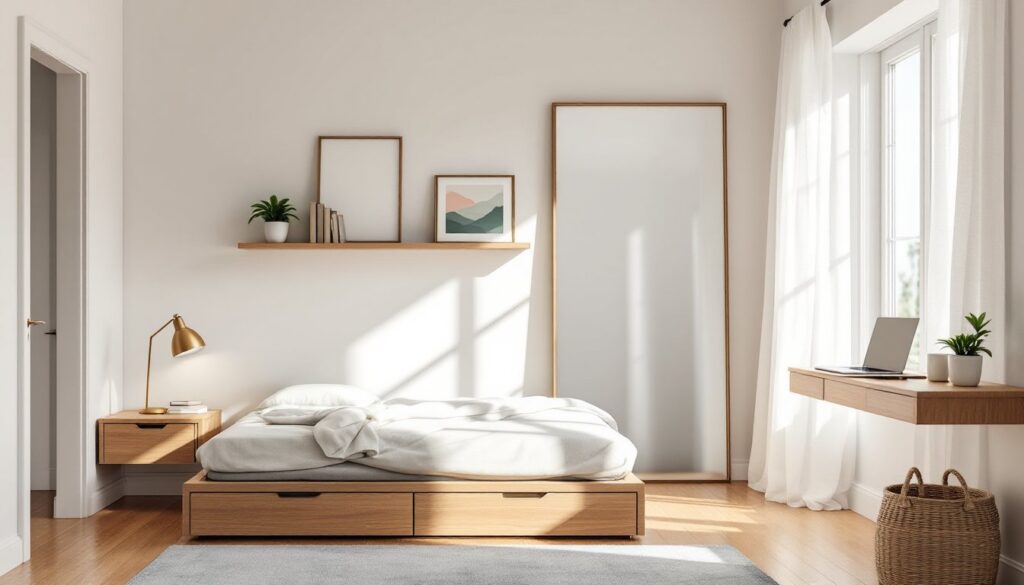
- Light, neutral colors and cool tones visually expand small bedrooms by reflecting light and making walls recede, so they’re the foundation of effective small bedroom decorating ideas.
- Vertical storage solutions like wall-mounted shelves, floating nightstands, and pegboards maximize floor space while adding functional display and organizational opportunities.
- Multi-functional furniture such as platform beds with built-in drawers, floating desks, and ottoman storage eliminates clutter and ensures every piece earns its place.
- Mirrors positioned opposite windows and strategic layered lighting—combining ambient, task, and accent sources—create the illusion of expanded space and depth.
- Minimalist organization with closed storage, uniform containers, and the “one in, one out” rule keeps clutter hidden and makes small spaces feel larger.
- Personal touches through coordinated textiles, large-scale artwork, and select accent pieces transform functional bedrooms into intentional, comfortable retreats without overwhelming the space.
Choose the Right Color Palette to Expand Your Space
Color is one of the most powerful tools for manipulating spatial perception. Light, neutral tones, soft whites, pale grays, and warm beiges, reflect more natural light and make walls feel like they recede rather than close in. That doesn’t mean the room has to feel sterile. A monochromatic scheme with varying shades of the same color family adds depth without visual clutter.
Cool tones like light blues and sage greens tend to push walls back optically, creating an airy feel. Warm tones like blush pink or terra cotta can work in small spaces if used sparingly, consider one accent wall rather than coating all four. Many home decorating ideas incorporate these principles to create visual breathing room.
Avoid stark contrasts between trim, ceilings, and walls. Painting trim and ceiling in the same or similar shade as the walls blurs boundaries and extends the sense of height and width. Semi-gloss or satin finishes on trim also bounce light around more effectively than flat paint.
If you crave bold color, use it strategically. A dark ceiling in a very small room can actually work if paired with lighter walls, it draws the eye up and creates a cozy, enveloping effect rather than feeling oppressive. Test sample pots on poster board and move them around the room at different times of day before committing to a gallon.
Maximize Vertical Space With Smart Storage Solutions
In small bedrooms, floor space is precious, but vertical real estate is often underutilized. Wall-mounted shelving, floating nightstands, and tall bookcases free up square footage while adding storage and display opportunities.
Install shelves above the bed, along unused wall stretches, or even around door frames. Use 1×8 pine boards or pre-finished shelving from home centers: mount them to studs with L-brackets rated for the load. For heavier items, toggle bolts work in drywall, but studs are always better. Keep shelving depth to 8–10 inches to avoid encroaching too far into the room.
Floor-to-ceiling storage units can serve double duty as room dividers if the layout allows. Look for modular systems that can be reconfigured as needs change. Similar strategies apply when tackling small RV decorating, where vertical thinking is essential.
Pegboards or slat wall systems offer flexible organization for accessories, hats, or jewelry. Mount them with a 1-inch standoff from the wall to allow hooks to slide in. Paint the pegboard to match the wall color for a cohesive look, or use it as an accent feature.
Over-the-door organizers and hooks turn wasted space into functional storage. Just be sure the door can still close fully and that hinges aren’t stressed by added weight. Reinforce hinge screws with slightly longer ones if needed.
Select Multi-Functional Furniture for Small Bedrooms
Every piece of furniture in a small bedroom should earn its spot. Multi-functional pieces reduce clutter and maximize usability without crowding the room.
A platform bed with built-in drawers or a lift-up storage base eliminates the need for a separate dresser. Look for models with 12–18 inches of clearance under the mattress platform, that’s enough for bins, off-season clothing, or extra bedding. Murphy beds (wall beds) are a step further, freeing up the entire floor when not in use. Most require 8–10 inches of wall depth and should be anchored to studs per manufacturer specs.
Nightstands with shelves or drawers keep essentials within reach without adding bulk. Floating nightstands mount directly to the wall and leave the floor beneath clear, which helps the room feel less congested. Platforms like Apartment Therapy showcase creative ways to integrate compact furniture in tight spaces.
A fold-down desk or wall-mounted drop-leaf table provides workspace when needed and disappears when not. Secure it with heavy-duty folding brackets rated for at least 100 pounds to support a laptop and books. Ottomans with lift-off lids or benches with hinged seats add seating and storage without taking up extra real estate.
Skip oversized armchairs or bulky furniture sets. Instead, look for scaled-down or modular pieces that fit the room’s proportions. Measure doorways and hallways before buying, nominal door width is 32 inches, but effective clearance is often less. Many DIYers have discovered creative furniture hacks that adapt standard pieces to fit small bedroom dimensions.
Use Mirrors and Lighting to Create the Illusion of Space
Mirrors are the oldest trick in the small-space playbook, and they work. A large mirror, ideally 36 inches or wider, reflects light and visually doubles the room. Position it opposite a window to maximize natural light, or angle it to reflect an attractive view or architectural detail.
Leaning a full-length mirror against the wall is easier than mounting and still effective. If mounting, use D-ring hangers on the back and appropriate wall anchors, 50-pound rated for most mirrors over 24 inches. Never rely on adhesive alone for anything over a couple of pounds.
Mirrored closet doors or a mirrored accent wall can dramatically open up a small bedroom. Frameless or thin-framed mirrors maintain a clean look without adding visual weight. Designers at MyDomaine frequently use mirrors in bedroom makeovers to enhance both light and perceived space.
Layered lighting is critical. A single overhead fixture casts harsh shadows and flattens the space. Instead, combine ambient, task, and accent lighting. A ceiling fixture or recessed cans provide general illumination, while table lamps or wall sconces add warmth and eliminate dark corners that make rooms feel smaller.
Dimmer switches let you adjust mood and function. They’re easy to install, turn off the breaker, remove the old switch, connect the hot, neutral, and ground wires per instructions, and secure the dimmer in the box. Use LED-compatible dimmers if you’re running LED bulbs to avoid flickering.
Under-bed LED strips or behind-headboard lighting create a floating effect that adds depth. Battery-operated or plug-in LED tape is simple to install, just peel and stick. For a permanent install, run low-voltage wire to a transformer and hide it behind furniture.
Declutter and Organize With Minimalist Design Principles
A small bedroom can’t hide clutter. The less you own, the larger the space feels. Start by editing down to what’s actually needed and used regularly. Donate, sell, or store seasonal items elsewhere.
Closed storage is your friend. Open shelving looks great in magazines but can quickly become visual chaos in a small room. Cabinets, drawers, and bins with lids keep belongings accessible but out of sight. Use uniform storage containers, clear bins for visibility or matching fabric baskets for a cohesive look.
Draw on interior decorating ideas that emphasize clean lines and intentional choices. Stick to a limited color palette for textiles and accessories. Too many competing patterns and hues make a small space feel cluttered even when it’s tidy.
Keep surfaces clear. Nightstands should hold a lamp, alarm clock, and maybe a book, not a shrine of half-empty water bottles and loose change. A small tray corrals essentials and makes cleaning easier.
Adopt the “one in, one out” rule: every new item that enters the room should replace something that leaves. This keeps accumulation in check and forces intentional purchasing.
Regularly rotate decor and textiles. Swapping throw pillows, artwork, or bedding seasonally keeps the room feeling fresh without adding permanent clutter. Store off-season items in under-bed bins or a hall closet.
Add Personality With Textiles, Artwork, and Accents
Minimalism doesn’t mean sterile. Personal touches turn a functional bedroom into a retreat. Start with textiles, bedding, curtains, throw pillows, and rugs, to introduce color, pattern, and texture without permanent commitment.
Layer bedding with different textures: a linen duvet, a cotton quilt, and a knit throw add visual interest and warmth. Stick to two or three coordinating colors to avoid overwhelming the space. Lightweight fabrics like cotton or linen are easier to wash and maintain than heavy velvets or chenilles.
Curtains should be hung as close to the ceiling as possible and extend to the floor. This draws the eye upward and makes walls appear taller. Use a tension rod for renters or mount a 1-inch diameter rod with brackets screwed into studs or drywall anchors rated for the fabric weight. Sheer or light-filtering curtains maintain privacy while letting in natural light.
Artwork adds personality without taking up floor space. A single large piece (24×36 inches or larger) makes more impact than a scattered gallery wall in a small room. Hang artwork so the center is at 57–60 inches from the floor, standard gallery height. Use picture-hanging hooks rated for the frame weight, and double up on hooks for anything over 20 pounds.
Avoid overcrowding walls. One statement piece per wall is often enough. If you love gallery walls, keep frames uniform and spacing tight, 2–3 inches between frames, for a cohesive look.
Accent pieces like plants, candles, or a statement lamp bring life and warmth. Choose one or two standout items rather than a dozen small knickknacks. A tall plant in a corner adds height and softens hard edges. Low-maintenance varieties like snake plants or pothos tolerate low light and inconsistent watering.
Conclusion
Small bedrooms demand creativity, not compromise. By choosing the right colors, maximizing vertical storage, selecting multi-functional furniture, using mirrors and lighting strategically, keeping clutter in check, and adding personal touches, anyone can transform a tight space into a comfortable, stylish retreat. The best small bedroom doesn’t feel small, it feels intentional.